

What Is Peer Recognition and Why Does It Matter?




-
1.What Is Peer Recognition?
-
2.How Peer Recognition Works in Practice
-
3.Why Peer Recognition Matters (Core Value)
-
4.Key Benefits of Peer Recognition
-
5.Peer Recognition vs Employee Recognition
-
6.What Peer Recognition Looks Like
-
7.What Makes Peer Recognition Effective
-
8.Common Mistakes to Avoid
-
9.How Can HeartCount Add To Peer Recognition
-
10.Encourage Peer Recognition Today
-
11.Peer Recognition FAQs




Most companies say recognition matters. In reality, most employees still feel their work goes unnoticed. The problem is how recognition works. When it depends only on managers, it becomes slow, inconsistent, and limited. A large part of daily work never gets recognized.
Peer recognition solves that gap. It allows employees to recognize each other in real time, based on what they actually see and experience. That shift increases engagement, improves morale, and strengthens workplace culture without adding complexity.
Once recognition becomes part of everyday work, everything changes. How? Stay with me. In this article, I’m explaining what peer recognition is and why it matters.

What Is Peer Recognition?
Peer recognition is when employees recognize and appreciate each other’s work, effort, and positive behavior across all levels of a company.
It is a form of employee recognition that does not rely on managers. Instead of top down recognition, appreciation comes directly from a peer, a colleague, or a team member who sees the work happening in real time.
Peer-to-peer recognition can be both formal and informal. It may be part of a structured recognition program, or it can happen naturally in day-to-day work.
Common ways peer recognition appears in practice:
- A quick message in Microsoft Teams praising a team member
- A shoutout during a team meeting
- A note recognizing someone’s hard work on a project
- A post on social media highlighting great work
- Points or a small reward given through recognition platforms
Unlike traditional employee recognition programs, peer recognition programs are not limited by hierarchy. Any employee can recognize another employee, regardless of role or seniority.
As a result, more work gets noticed, more positive feedback is shared, and recognition becomes part of everyday behavior instead of a formal process.
In practice, a peer recognition program turns recognition into a shared responsibility. It shifts recognition from occasional to frequent, visible, and part of the company culture.
How Peer Recognition Works in Practice
Peer recognition works as a real-time feedback system inside the company. It links daily actions to immediate appreciation, so employees quickly understand what matters.
Core flow:
- An employee delivers value through effort, results, or support
- A peer recognizes that contribution
- Recognition is shared, either privately or as public recognition
- The behavior gets reinforced and repeated
The cycle runs continuously within peer recognition programs. It replaces delayed, top-down recognition with frequent recognition that happens closer to the actual work.
What changes inside the organization:
- Faster feedback loop → recognition happens close to the action
- Stronger engagement → employees stay connected to their impact
- Higher visibility → more contributions are acknowledged across teams
- Clear behavior signals → employees see what positive behavior looks like
Over time, peer-to-peer recognition turns recognition into a system. It strengthens workplace culture by making employee appreciation part of daily execution, and not just part of a formal employee recognition program.
Why Peer Recognition Matters (Core Value)
Peer recognition matters because it creates a continuous system that drives engagement, alignment, and performance.
Most employee recognition programs rely on top-down recognition, which is limited and delayed. Peer recognition removes that bottleneck. It happens at the level where work actually gets done.
This changes how culture operates. Instead of relying on policies or company value statements, organizations reinforce behavior through daily signals. Meaningful recognition becomes a tool that shapes how employees act, collaborate, and prioritize work.
At scale, peer-to-peer recognition improves:
- Employee engagement by keeping people connected to their impact
- Alignment by showing what behaviors the company values
- Performance by reinforcing actions that lead to results
The result is a system in which culture, engagement, and execution are tightly connected rather than managed separately.
Key Benefits of Peer Recognition
Peer recognition drives measurable business outcomes. It improves engagement, retention, and performance by reinforcing the right behaviors in real time.
Companies that invest in recognition programs consistently report stronger employee engagement, lower employee turnover, and better workplace culture.
1. More Work Gets Recognized
Managers only see a fraction of daily execution. A peer sees the real effort behind tasks, collaboration, and problem-solving. Peer recognition expands visibility across the organization, especially for work that would otherwise go unnoticed.
According to SHRM, 34% of employees say they do not feel recognized at work, which shows a large gap in traditional employee recognition systems.
When peer recognition programs are introduced, that gap shrinks because recognition is no longer limited to manager recognition.
Impact: Employees feel seen more often, which improves employee morale and satisfaction
2. Higher Employee Engagement
Recognition creates a direct link between effort and appreciation. When employees receive frequent recognition, they stay connected to their work and maintain higher levels of engagement.
Data shows that 81.9% of employees say recognition improves their engagement. Employees who receive valuable feedback from the people they work with (peers) are 5 times as likely to be highly engaged. Peer-to-peer recognition is especially effective because it feels more authentic than manager-driven feedback.
Impact: More stable motivation, stronger engagement, and more consistent performance
3. Stronger Team Relationships
Recognition builds trust between team members. It highlights cooperation, support, and shared success, which strengthens workplace relationships.
Peer recognition increases the probability of a strong, constructive team culture.
Peer recognition can improve workplace performance by 14% by driving a sense of positivity and “zeal” among team members. It also improves psychological safety, which allows employees to communicate openly and collaborate more effectively.
When appreciation becomes part of daily work, teams shift from competition to cooperation.
Impact: Faster collaboration, fewer conflicts, and stronger team dynamics
4. Better Alignment With Company Goals
Recognition shows employees what behaviors matter. Instead of relying only on company value statements, employees see real examples of what gets rewarded.
In practice, recognition helps employees connect their daily work to business goals. In one example, a recognition initiative increased employees’ understanding of the company vision from 57% to 75%.
Peer recognition programs make alignment visible and continuous, not abstract.
Impact: Clear priorities, better execution, and stronger alignment across teams
5. Lower Employee Turnover
Feeling valued is a key driver of employee retention. When employees receive consistent appreciation, they are less likely to leave.
Research shows that well-recognized employees are 45% less likely to leave the company within two years. Recognition reduces employee turnover by strengthening a sense of belonging and improving job satisfaction.
Impact: Higher employee retention, lower hiring costs, and more stable teams
Peer Recognition vs Employee Recognition
Peer recognition and traditional employee recognition serve the same goal, but they work very differently. The key difference is who gives recognition and how often it happens.
In most companies, employee recognition programs rely on top-down recognition from managers. That limits visibility, slows feedback, and reduces how often employees receive appreciation. Peer recognition removes that limitation. It allows any employee to recognize a colleague or team member in real time, which increases engagement, morale, and culture consistency.
Peer recognition programs scale better because they match how work actually happens. Most work is done between team members, not in front of managers. When recognition follows that reality, it becomes more accurate, frequent, and meaningful.
| Factor | Peer Recognition | Manager Recognition |
| Visibility | High, peers see daily work and hard work | Limited, managers miss most execution |
| Speed | Immediate, recognition happens in real time | Delayed, tied to reviews or formal check-ins |
| Perception | Feels authentic and genuine from a peer | Feels evaluative and tied to performance judgment |
| Coverage | Broad, spans across teams and roles | Narrow, limited to direct reports |
| Impact on culture | High, reinforces positive behavior daily | Moderate, slower effect on workplace culture |
The practical outcome is clear. Peer-to-peer recognition increases frequent recognition, strengthens workplace culture, and improves employee engagement faster than traditional recognition programs.
What Peer Recognition Looks Like
Peer recognition shows up in simple, everyday actions. It does not require a complex recognition program or a large budget. What matters is that appreciation is visible, timely, and tied to real work.
Common recognition ideas used in peer recognition programs include:
- Slack or Microsoft Teams shoutouts recognizing a team member’s contribution
- Recognition shared during a team meeting to highlight great work
- Peer-nominated awards tied to a company value or goal
- Short thank-you messages that acknowledge effort or support
- Points or micro-bonuses through a recognition platform or reward gateway
- Public recognition boards where employees highlight each other’s work
These examples combine social recognition and, in some cases, employee rewards. Both approaches reinforce positive behavior and strengthen workplace culture.
Key point: Peer recognition does not depend on a budget. Consistent appreciation from a peer or colleague can drive engagement, morale, and employee satisfaction even without a tangible reward.

What Makes Peer Recognition Effective
Peer recognition works only when it is clear, consistent, and meaningful. Without structure, recognition becomes generic and loses impact.
These best practices define effective peer recognition programs:
- Timely → recognition happens immediately after the action, so the connection between effort and appreciation is clear
- Specific → it explains what was done, how it helped, and why it matters to the team or company value
- Genuine → it feels natural and honest, not forced or routine, which keeps appreciation credible
- Visible → it is shared publicly when possible, so others see the behavior and repeat it
When these elements are present, recognition reinforces positive behavior, strengthens workplace culture, and improves employee engagement.
If any of these are missing, recognition becomes less effective. Delayed or vague recognition weakens the signal, while private-only recognition limits its impact on culture and morale.
Common Mistakes to Avoid
Peer recognition fails when it is inconsistent, unclear, or disconnected from how the company operates. These mistakes reduce impact and turn the recognition strategy into a low-value activity:
- Generic praise (“good job”)
Generic recognition does not explain what was done or why it matters, so it fails to reinforce positive behavior. Employees cannot repeat what they do not clearly understand. Over time, this reduces the impact of recognition and weakens engagement. - Infrequent recognition
Recognition that happens occasionally does not sustain motivation or engagement. Without frequent recognition, appreciation loses relevance and employees disconnect from their impact. Consistency is what turns recognition into a system, not a one-time event. - Only private recognition (no visibility)
Private recognition limits its effect to one person instead of influencing the broader team. When recognition is not visible, it cannot shape culture or signal what good work looks like. Public recognition amplifies behavior across team members. - No link to company values
Recognition without connection to a company value or goal becomes random and inconsistent. Employees receive appreciation but do not understand what behaviors are expected. Linking recognition to values aligns daily work with business priorities. - Treating it as an HR initiative instead of a system
When peer recognition is treated as a one-off HR program, adoption stays low and impact fades. It needs to be embedded into daily workflows, tools, and leadership behavior. Strong recognition programs operate as part of how the company runs, not as a side activity.
How Can HeartCount Add To Peer Recognition
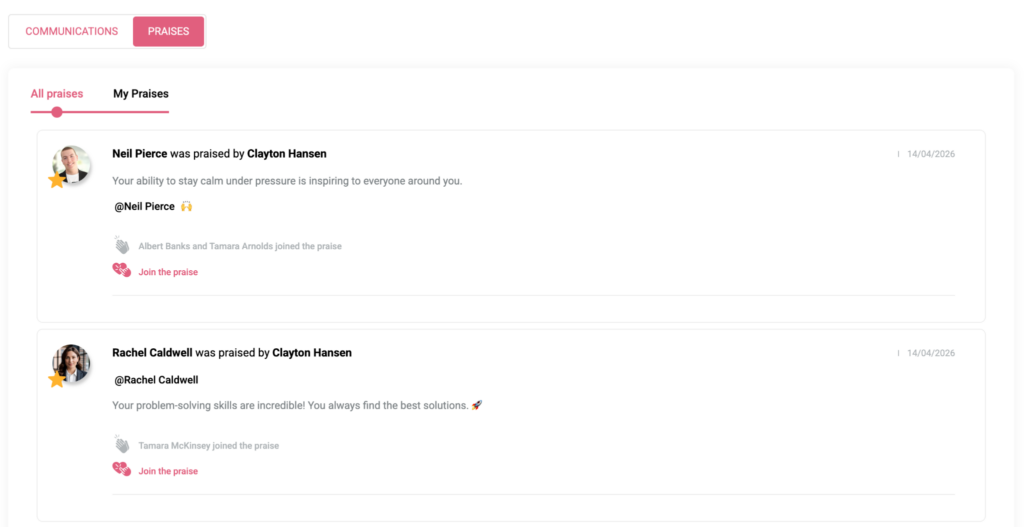
HeartCount, an employee engagement platform, makes peer recognition simple, visible, and easy to use every day. Instead of random appreciation, it puts everything in one place, so recognition happens more often and is easy to see and understand.
Employees can send praise directly from their profile, tag a colleague or multiple team members, and trigger instant notifications. That removes delay and increases frequency, which is the main failure point in most recognition programs.
Instead of staying private, recognition appears on a shared “praise wall” where others can see it, react to it, and even join the same recognition. That turns a single moment of appreciation into a cultural signal that spreads across teams.
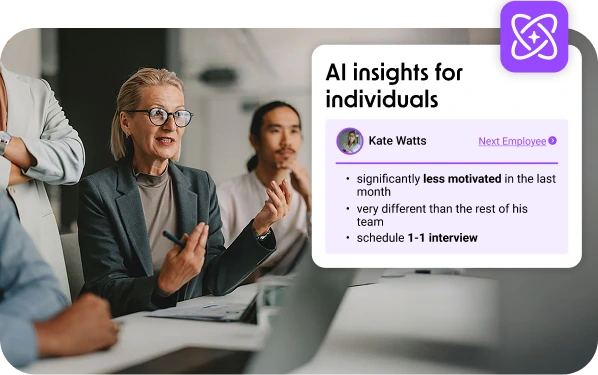
Another shift happens in how recognition is used. HeartCount tracks who gives and receives recognition, which makes patterns visible. You can see which employees are consistently recognized, where engagement is strong, and where it is missing.
That allows HR and leadership to connect recognition with employee engagement, performance, and retention instead of treating it as a soft metric.
The platform also connects recognition with communication and feedback. Employees receive notifications, can respond, and stay engaged in an ongoing loop of appreciation and interaction. Over time, this builds stronger relationships and keeps morale stable, even in distributed or remote teams.
What changes in practice is not just how recognition is given, but how it functions. It becomes part of daily work, visible across the company, and tied to real outcomes. That is the difference between having a recognition program and having a system that actively shapes culture and engagement.
Encourage Peer Recognition Today
Peer recognition is one of the simplest ways to improve engagement, morale, and workplace culture. When appreciation happens often, and between peers, employees feel valued, stay motivated, and work better together.
The challenge is making it consistent, visible, and part of everyday work. That is where most recognition programs fail.
HeartCount solves that by making recognition easy to give, easy to see, and easy to track. It turns appreciation into a system that supports engagement, strengthens culture, and improves employee retention.
Book a HeartCount demo and give your team a simple way to recognize, support, and motivate each other.
Peer Recognition FAQs
What is peer recognition?
Peer recognition is when employees appreciate each other’s work instead of waiting for managers to do it. It helps more contributions get noticed and keeps appreciation a part of daily work.
How is peer recognition different from employee recognition?
Employee recognition usually comes from managers as part of a formal employee recognition program. Peer recognition happens between team members in real time, which makes it more frequent and often more meaningful.
Does peer recognition need a budget?
No. Peer recognition can work without employee rewards or tangible rewards. Simple appreciation, positive feedback, or public recognition is often enough to improve engagement and morale.
How often should peer recognition happen?
Peer recognition should happen regularly, not occasionally. Frequent recognition keeps employees engaged and reinforces positive behavior, which improves workplace culture over time.
Can peer recognition improve employee retention?
Yes. When employees feel valued and appreciated by their peers, job satisfaction increases. This reduces employee turnover and helps companies keep strong team members longer.