

What Is Quiet Quitting and How To Prevent It




-
1.Why People Started Talking About Quiet Quitting
-
2.What Quiet Quitting Actually Looks Like at Work
-
3.Why Quiet Quitting Happens
-
4.Why Companies Miss the Early Signs of Quiet Quitting
-
5.Is Quiet Quitting a Problem?
-
6.Why Quiet Quitting Is Hard to Measure
-
7.How Quiet Quitting Turns Into Real Risk
-
8.How HeartCount Prevents Quiet Quitting
-
9.Final Thoughts on Quiet Quitting




Your once agile employee is still here, replying and delivering, but something’s shifted. No more initiative and push. The energy that used to be there is gone, and it didn’t leave with a resignation letter. This phenomenon is called quiet quitting.
It happens when employees stop going beyond their basic job duties because they no longer see the point. Effort felt ignored, and feedback went missing. Over time, they shut down the part of them that used to care.
It’s not loud. It doesn’t show up in reports. But if you’re in HR or managing people, you’ve felt it. And if it spreads, it drags down trust, energy, and culture, long before performance ever drops.
In this article, I explain what quiet quitting is, what causes it, and how to recognize and prevent it.

Why People Started Talking About Quiet Quitting
People started talking about quiet quitting in 2022 when the term showed up on TikTok.
A guy named Zaid Khan made a short video explaining how he stopped going above and beyond at work. He said he still did his job, just not the extra stuff no one paid him for. That clip went viral, and the phrase took off.
But the idea isn’t new. People have been doing the bare minimum for years, just without a catchy name. What made this one stick was timing.
The world was coming out of COVID lockdowns. Everyone was burned out. Workers felt overworked, underpaid, and tired of pretending they were fine. The phrase “quiet quitting” gave people a way to talk about backing off without feeling lazy or guilty. It put a name to something a lot of us were already feeling.
It resonated because it wasn’t about quitting your job, but quitting the extra, unpaid pressure. It made people feel seen.
What Quiet Quitting Actually Looks Like at Work
Quiet quitting doesn’t mean someone stops working. It means they stop giving extra effort beyond what their job duties require. A quiet quitter still shows up, completes tasks, and follows rules. But they do just enough to meet expectations, nothing more.
Here’s what that looks like day to day:
- They reply to emails, but keep it short. No extra commentary. No staying up late to fix things.
- They stop volunteering for non mandatory meetings or optional projects.
- If they used to brainstorm or help outside their role, they’ve pulled back. They don’t raise their hand unless they have to.
- They take full lunch breaks. They leave on time. They don’t answer work messages after hours unless it’s urgent.
- Their working hours are clean. They don’t log overtime unless they’re paid for it.
- If someone asks for help outside their role, they say no or defer to someone else.
- Their tone may be more neutral or quiet. Fewer ideas are shared in meetings. More of doing the basics and going back to focus.
To the employer, this can look like stability. Output stays steady, and deadlines get met. But what’s missing is energy: the push, the creativity, the collaboration. That’s where engagement used to live.
Quiet quitting is not the same as slacking. The employee isn’t late. They aren’t rude.
They just stop stretching. They’ve stepped back to protect themselves, often trying to find a better work life balance. They may feel drained, ignored, or underappreciated. So they give what’s required and save the rest of their energy for their life outside of work.
This kind of employee disengagement is silent. There’s no announcement or complaints. Just a quiet shift in how they show up, and what they stop doing.
Why Quiet Quitting Happens
Quiet quitting isn’t random. It usually shows up when the system breaks down. It happens when employees don’t feel seen, supported, or safe. Not emotionally unsafe, just unsafe to speak up, ask for help, or push back without consequences. So instead of complaining, they check out quietly.
Some of the strongest reasons for soft quitting include:
- Unclear expectations
When a manager doesn’t explain what success looks like or keeps moving the target, people stop trying to guess. If I don’t know what really matters, I do what I’m told and nothing more. That’s how disengagement begins. - Weak feedback
Many workers go months without hearing how they’re doing. No thanks, no coaching, no “this matters.” When someone puts in extra work, and it goes unnoticed, they start thinking, Why bother? They’re not being difficult. They’re responding to silence. Over time, that silence wears them down. - Invisible effort
Some employees do a ton behind the scenes: mentoring teammates, fixing problems, smoothing tension in meetings. None of it’s on paper. If the system doesn’t count that kind of work, people stop doing it. They stick to what’s visible: tasks in a tracker, hours on the clock, emails replied to. - Low psychological safety
If speaking up leads to being ignored, blamed, or labeled as negative, people shut down. They stop giving input and pushing back. Quiet quitting becomes the only safe option; they do their job, keep quiet, and hope no one bothers them.
All of these points go back to the system, not the person. Most quiet quitters don’t plan to disengage. They slide into it when they realize that extra effort doesn’t lead to more respect, growth, or career advancement. They’re not lazy. They’re reacting to a workplace that feels one-sided.
In a broken system, employee dissatisfaction builds quietly. People protect their energy and draw a line. Not because they don’t care, but because caring stopped working. That’s why quiet quitting isn’t just about the person. It’s a signal that the system isn’t holding up its side of the deal.
Why Companies Miss the Early Signs of Quiet Quitting
Most employers don’t see quiet quitting coming. The signs are subtle because people still show up and finish their work. They aren’t openly upset, so companies assume everything’s fine… until it isn’t.
Mistakes managers oversee:
- Assuming silence means stability
When a disengaged employee pulls back, they rarely announce it. They just stop raising concerns. They don’t push for change. They don’t speak up in meetings. That quiet gets misread as calm. But really, it’s the sound of someone giving up on being heard. - Surveys come too late
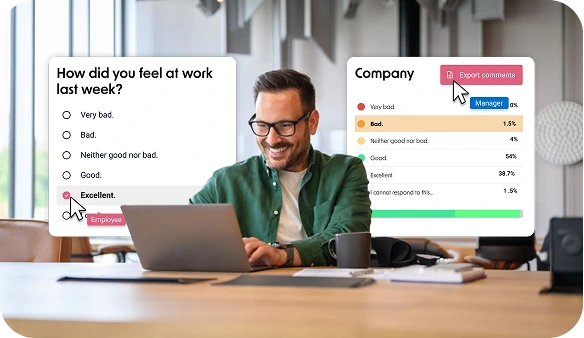
By the time an annual engagement survey goes out, some quiet quitters have already checked out. Others won’t answer honestly if they don’t trust the process. They fear being identified because they think nothing will change. So they click “neutral” on everything, and leadership sees a stable score that hides real problems. Even pulse surveys every few months can miss fast drops in employee morale. - Managers rely on output to measure engagement
If someone’s getting their tasks done, meeting deadlines, and replying to emails, it looks like they’re fine. But they’re probably doing the bare minimum. The work gets done, but the spark is gone; there are no new ideas, no extra support for teammates, no push to improve things. That kind of low-energy performance blends in unless the manager is paying close attention. - Remote work makes this harder
It’s easier to hide disengagement when no one sees your body language. You can be quiet in a Zoom meeting and no one notices. You can do just enough to stay off the radar. That’s part of why quiet quitting rose during remote work; it’s easier to soft quit when visibility is low. - Some teams are too focused on high performers
They reward people who overdeliver and ignore those who don’t. But that creates pressure. Others see that extra work gets normalized, not appreciated. Eventually, they pull back, and no one notices until there’s a bigger issue, like low job satisfaction, missed goals, or someone finally quitting for real.
In the end, companies miss quiet quitting because they aren’t looking for it the right way. They watch for loud problems: complaints, missed deadlines, and poor attitude.
But quiet quitting isn’t loud. It hides behind steady output. And unless leaders pay attention to how people feel, not just what they do, they’ll keep missing the signs.
Is Quiet Quitting a Problem?
Quiet quitting can go two ways. Sometimes it’s harmless. Other times, it’s a warning sign. It depends on why it’s happening and what comes next.
Sometimes it’s just healthy boundary-setting.
A person is doing their job well, but no longer stretching beyond it. They want a better work life balance, so they stop answering emails at night, stop picking up last-minute extras, and take their full lunch break. They aren’t angry or checked out—they’re just choosing not to overextend anymore. That isn’t a problem. In fact, if everyone worked within clear boundaries and still met expectations, the workplace would probably be healthier.
But sometimes it’s riskier: quiet quitting is a symptom of deeper disengagement.
That’s when someone stops caring, not just about extra tasks, but about the core job. They show up late. They avoid non-mandatory meetings. They don’t look for ways to improve. Their energy drops, and it starts to affect others. This isn’t about balance anymore. It’s detachment.
The tricky part is that both can look the same from the outside. An employee doing the bare minimum could be setting smart limits, or they could be slowly checking out. If burnout, stress, or employee dissatisfaction is behind it, then it’s not just a neutral choice, but a warning sign.
So, is quiet quitting a problem?
It depends. If it’s about protecting mental health and staying steady, maybe not. But if it’s covering up a drop in engagement, then yes, it’s a quiet signal that something’s broken and getting worse. Ignoring it can lead to bigger issues later: missed goals, team drag, or full-on turnover.
Why Quiet Quitting Is Hard to Measure
Quiet quitting is hard to spot because it doesn’t show up in obvious ways. The decline is in effort, not attendance. That’s what makes it tricky.
The usual ways companies track performance don’t catch it early, or sometimes at all.
Lagging Metrics
Most companies look at output: reports filed, sales made, deadlines hit. But those numbers can stay flat even when someone is disengaged.
People often keep performing at the same surface level while pulling back on the things that don’t get tracked, like creative ideas, mentorship, or team support. So by the time productivity metrics drop, the quiet quitter has already been disengaged for weeks or months.
Biased Surveys
Engagement surveys rely on self-reporting. But people don’t always tell the truth, especially if they don’t trust that their answers are anonymous.
An employee who’s disconnected might still click “somewhat satisfied” just to avoid attention. Others might skip the survey completely. This means leadership sees mild, stable results and assumes nothing’s wrong. But the quiet quitting is still happening underneath.
Averages Hide the Change
If ten people are doing great and three are quietly quitting, the team score might still look fine on paper. But that average masks the shift. Leaders don’t see the early cracks because the numbers look smooth.
Over time, that hidden group of disengaged employees grows, and the damage shows up all at once, like a drop in employee satisfaction, higher turnover, or burned-out team leads.
Lack of Red Flags
A person can still check every box on a performance management system. They’re not late. They’re not missing work. But the extra effort is gone.
That’s hard to measure unless a manager knows what to look for, like changes in tone, energy, or initiative. And if that manager’s too busy or too focused on output, they miss it.
In remote work settings, this gets even harder. You don’t see someone’s mood. You don’t notice if they stop talking in meetings. That makes silent quitting easier to hide. No one sees the slow withdrawal until results slip or someone finally leaves.
To measure quiet quitting, companies need to shift from output tracking to real-time signals, like tone shifts, patterns in behavior, or early drops in employee feedback. Most aren’t there yet. That’s why quiet quitting keeps flying under the radar until the damage is done.

How Quiet Quitting Turns Into Real Risk
Quiet quitting starts small, but it doesn’t stay small. What looks like a calm employee doing their job can turn into a real problem for the person, the team, and the company.
In practice, it typically looks like this:
- It starts with disengagement. The employee stops putting in extra effort. They still meet their job duties, but there’s no energy behind it. At first, this feels manageable, but it builds.
- Over time, that quiet withdrawal leads to burnout. Not the loud kind where someone breaks down, but the flat kind – emotionally checked out, tired all the time, running on autopilot. The person feels stuck. They don’t speak up or ask for help. They just get through the day, one task at a time.
- Then comes attrition. Either the person quits for real, or they stay and quietly spread the same behavior. When someone is burned out and no one notices, they lose trust in the system. They may leave without warning, or worse, stay and drag the team down.
- That’s when it turns into team drag. Others notice the quiet quitter pulling back. They pick up the slack, get frustrated, or start doing the same thing. This spreads disengagement like a slow leak. High performers get annoyed and might quiet quit too. Or they leave, and now you’ve got open roles and lower morale at the same time.
- If a company isn’t paying attention, this spiral gets expensive. Productivity and employee morale drop. Replacements cost money and time. And leadership is left wondering how a team that looked “fine” a few months ago suddenly hit a wall.
Quiet quitting is a system warning. If it’s ignored, it becomes a pipeline: from silence to burnout to turnover. And fixing it at the end is harder than catching it at the start.
How HeartCount Prevents Quiet Quitting
HeartCount doesn’t wait for quiet quitting to turn into full silent resignation. It works by spotting the early drops in motivation, the kind that most companies miss.
Quiet quitting doesn’t happen overnight. A worker pulls back slowly. Heartcount makes those slow shifts visible before they turn into long-term employee disengagement.
Continuous Sentiment Visibility
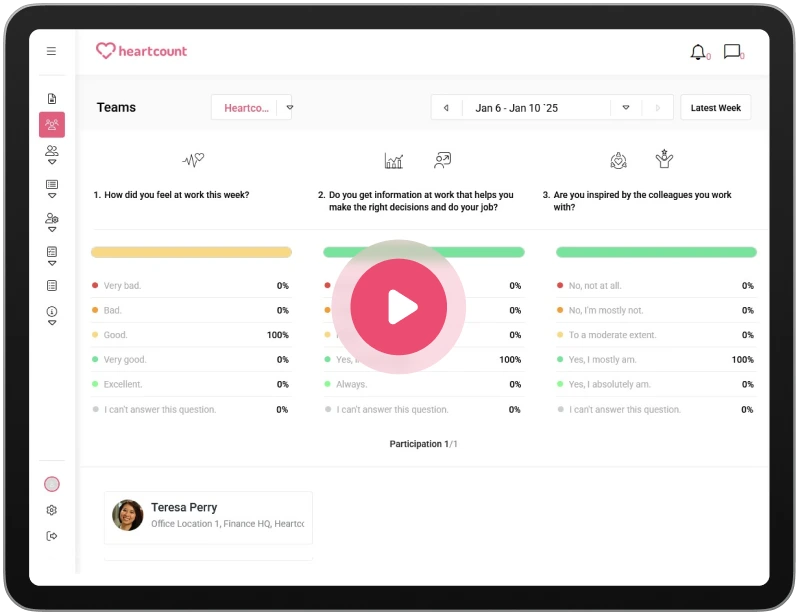
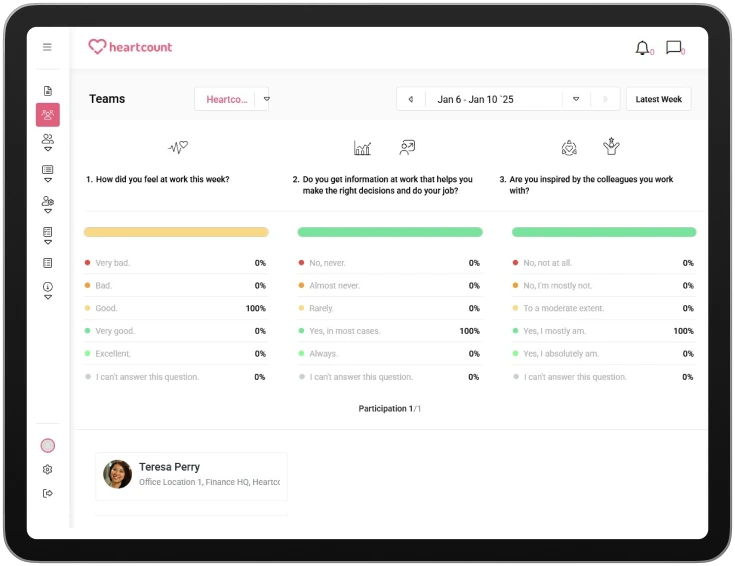
Most tools check in once or twice a year, usually during annual reviews or engagement surveys. But by that point, the quiet quitting trend has already taken hold. HeartCount is different; you can send weekly pulse checks with just three simple questions.
That steady rhythm is what makes it powerful. You can see how employees felt across weeks, not just in a one-off mood. If someone’s energy, motivation, or connection to their team starts slipping, it will show up as a quiet pattern.
And that’s key, because quiet quitting shows up in patterns, not single events.
Without continuous visibility, HR professionals and managers are left with blind spots. A few rough weeks go unnoticed. By the time it shows in performance, the damage is done.
Heartcount cuts that lag and spots risk while there’s still time to act.
Early Signals Before Behavior Changes
Quiet quitting usually appears in emotions first. The behavior changes, like pulling back, doing the bare minimum, and skipping the extra work, come later.
With Heartcount, you can see emotional shifts early:
- Motivation fading, little by little
- People feel less heard or supported
- Signs of burnout or emotional fatigue
- Lower trust in leadership or unclear expectations
These aren’t signs that someone will quit tomorrow. But they’re proof that something’s changing. Without early detection, those feelings harden. That’s how a healthy work life balance turns into full disengagement.
Heartcount doesn’t flag these as emergencies. It just gives managers signals they can use to start a normal conversation.
Manager Clarity Instead of Guessing
One major reason quiet quitting spreads is poor performance management. Managers sense something’s off, but they don’t know what. So they guess. Some get defensive, while others do nothing.
Heartcount replaces guessing with clarity. It shows:
- Where energy is slipping, by team, not just company average
- Which issues show up again and again in feedback
- Whether silence means stability or hidden problems
Instead of asking, “Why is John checked out?” a manager can say, “I’ve seen a drop in energy and team connection. Let’s talk.” That’s a better starting point. It lowers the risk of quiet firing, when managers push people out because they misinterpret silence.
Quiet Quitting Gets Addressed Before It Hardens
The biggest risk isn’t the first step of setting boundaries. It’s when employee dissatisfaction sticks around too long. That’s when people go from quietly checking out to never coming back.
Heartcount gives people a way to speak up without fear. They can say what’s not working while they still care. They don’t have to wait until their job satisfaction collapses. That kind of early outlet helps avoid hustle culture burnout or resentment over being ignored.
From what I saw, Heartcount doesn’t stop quiet quitting by pushing for more hard work. It prevents it by making people feel heard before they decide that nothing will change. That’s what makes it different. It doesn’t motivate harder. It listens smarter.

Final Thoughts on Quiet Quitting
Quiet quitting isn’t a story about lazy people. It’s a signal that something upstream isn’t working. When employees stop going above and beyond, it’s rarely because they don’t care. It’s usually because they tried, and no one listened.
What looks like low effort is often a listening failure, not an employee failure.
When people don’t feel heard, seen, or supported, they protect themselves by pulling back. The fix isn’t pushing harder or blaming workers. It’s fixing the systems that made pulling back feel like the safest choice.
Real engagement doesn’t start with motivation. It starts with trust, clarity, and feedback that lands before it’s too late.