
20 Signs of Employee Burnout Managers Shouldn’t Ignore




-
1.Key signs of employee burnout at a glance:
-
2.What is employee burnout? And how is it different from stress?
-
3.Why identifying burnout early matters for your organization
-
4.20 signs of employee burnout to watch for
-
5.Root causes: why employees burn out
-
6.Manager’s action checklist: what to do when you spot the signs
-
7.Proactive strategies to prevent employee burnout
-
8.Building a burnout-resistant workforce
-
9.FAQs




Employee burnout is no longer a fringe concern. According to a 2026 Spring Health Workplace Mental Health Report, 40% of burned-out employees describe themselves as physically present but “mentally checked out.” Gallup data puts the lifetime exposure rate at 76%, meaning three out of four of your employees will experience burnout at some point in their career.
For managers and HR leaders, the challenge is that burnout builds slowly and rarely announces itself. By the time an employee looks visibly exhausted or disengaged, the damage to their performance, health, and loyalty to the organization is often already done.
In this guide, we give you a complete picture: what burnout actually is, how it differs from everyday stress, the 20 most important warning signs to watch for, and what to do when you spot them.

Key signs of employee burnout at a glance:
- Chronic exhaustion that sleep does not fix
- Declining work quality and increased mistakes
- Withdrawal from team interactions and meetings
- Loss of motivation for work they previously enjoyed
- Increased irritability or emotional outbursts
- Persistent physical complaints (headaches, fatigue, illness)
- Missing deadlines despite previous reliability
- Cynicism or detachment toward the job or organization
What is employee burnout? And how is it different from stress?
The World Health Organization formally classifies burnout as an occupational phenomenon in ICD-11, defining it as a syndrome resulting from chronic workplace stress that has not been successfully managed.
Whether it manifests as job burnout in a high-pressure role, workplace burnout driven by a toxic work environment, or work burnout from sustained overload, the clinical definition is the same.
It is characterized by three core dimensions:
- Emotional exhaustion: A persistent, deep fatigue that rest alone does not cure. Employees feel emotionally and cognitively drained day after day; this is the most recognizable burnout symptom and typically the first to appear.
- Cynicism and mental distance: A growing detachment from the job, colleagues, or the organization, often accompanied by a loss of belief that their work matters.
- Reduced professional efficacy: A sense of ineffectiveness, increased self-doubt, and the feeling of falling short despite significant effort.
Stress and burnout are related but not the same. Stress typically involves too much: too many demands, too little time. Burnout is characterized by not enough: feeling empty, devoid of motivation, and disconnected from purpose. Stress can lead to burnout, but burnout is a more severe, chronic state. An employee experiencing stress may still feel engaged and optimistic about recovery. A burned-out employee often feels hopeless about improvement.
Overwork is one of the most common causes of burnout, but it is the cause, not the condition itself. An overworked employee is at high risk of burnout. Recognizing overwork early is therefore one of the most effective forms of burnout prevention.
Why identifying burnout early matters for your organization
Burnout is not just a well-being issue; it is a business risk with measurable financial consequences.
- Turnover costs: Replacing a salaried employee costs between six and nine months of their salary. Burned-out employees are 2.8 times more likely to be actively looking for a new job, according to Spring Health research. Employee retention suffers most in organizations that ignore early warning signs, a dynamic that became impossible to ignore during the Great Resignation.
- Absenteeism: Employees experiencing burnout have a 57% increased risk of workplace absences lasting more than two weeks. Increased absenteeism is one of the most measurable downstream costs of unaddressed employee stress.
- Healthcare costs: Harvard Business Review estimates that burnout-related healthcare spending accounts for $125–$190 billion annually in the US.
- Lost productivity: Burnout drives cynicism, exhaustion, and disengagement, all of which erode output quality, innovation, and team morale. Decreased productivity and reduced productivity levels are among the most consistent organizational consequences, and American workers report stress levels at near-record highs.
- Reputation damage: 55% of workers believe their employer perceives the workplace as mentally healthier than it actually is. Employees talk, and reviews on platforms like Glassdoor directly affect your ability to attract top talent.
The good news is that burnout does not develop overnight. It escalates gradually, giving managers a meaningful window to intervene if they know what to look for.
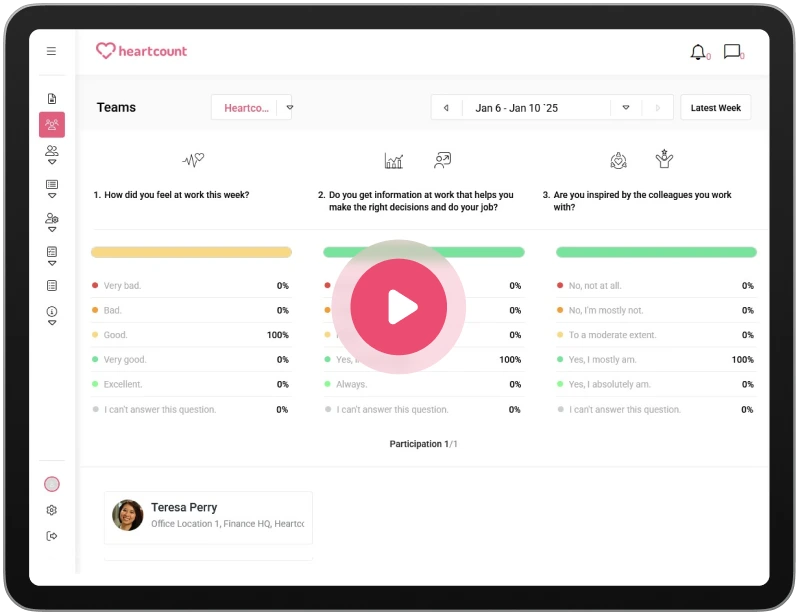
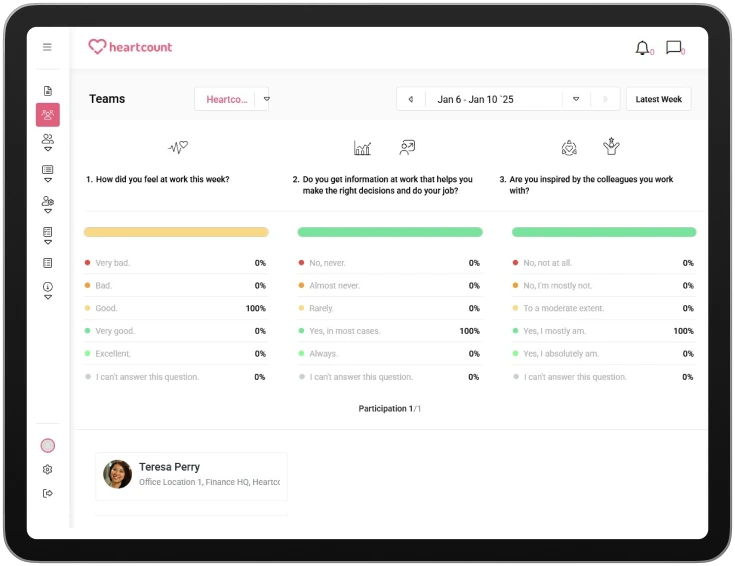
Tools like HeartCount surface these patterns early, tracking engagement trends, sentiment shifts, and workload signals across your team through short weekly check-ins that employees actually complete.
20 signs of employee burnout to watch for
The following signs are grouped by category to make it easier to spot patterns. A single sign-in isolation may reflect a temporary bad week. Three or more signs, particularly across different categories, are a strong signal that action is needed.
Behavioral and performance signs
1. Declining work quality
A reliable employee who begins making frequent errors, submitting incomplete work, or producing output clearly below their usual standard is one of the most visible early signals. This is not about laziness; it reflects cognitive overload. When the mental bandwidth required to maintain quality exceeds what an exhausted person can sustain, mistakes become inevitable.
Manager tip: Compare recent output to a baseline from three to six months ago, not just last week. Gradual decline is easy to normalize.
2. Missed deadlines
Occasional missed deadlines happen in every team. A pattern of them, particularly in someone who was previously reliable, is a red flag. Overloaded employees often stop asking for extensions because they feel ashamed, so the deadline simply passes without communication.
Manager tip: If a previously dependable employee misses a second deadline in a month, schedule a 1:1 focused specifically on workload, not the missed deadline itself.
3. Over-commitment and inability to say no
Counterintuitively, burned-out employees sometimes take on more than they can handle. This often stems from fear of appearing weak or uncommitted, or from a deeply ingrained sense of responsibility. The result is a downward spiral: the more they take on, the more they fail to deliver, and the worse the burnout becomes.
Manager tip: If someone never declines requests or always volunteers for additional work, that’s not always dedication. It can be a warning sign worth exploring.
4. Avoidance of professional development
Employees who are burning out tend to stop investing in growth. Training opportunities, mentorship, certifications, and internal mobility discussions get declined or ignored, not because of disinterest, but because they simply have no energy to engage.
Manager tip: Track engagement with development opportunities over time. A previously ambitious employee who suddenly stops engaging is worth a conversation.
5. Increased mistakes and poor decision-making
Chronic stress impairs cognitive function, particularly executive functions like decision-making, prioritization, and attention to detail. Burned-out employees may become indecisive, make impulsive choices, or miss errors they would normally catch. This is a physiological effect, not a character flaw.
Manager tip: Before attributing poor judgment to attitude or skill gaps, consider whether the employee is operating under sustained pressure.
Emotional and interpersonal signs
6. Increased irritability or emotional outbursts
Stress erodes emotional regulation. An employee who reacts strongly to minor inconveniences, snaps at colleagues, or has become noticeably short-tempered may be reaching or exceeding their emotional capacity. This is one of the most disruptive burnout signs because it affects team dynamics and trust.
Manager tip: Pay attention to the pattern, not the incident. One bad day is not burnout. A sustained change in demeanor over several weeks is.
7. Withdrawal from team interactions
Burned-out employees tend to pull back from the social fabric of the workplace. They skip optional meetings, stop contributing to team discussions, eat lunch alone, decline social invitations, and gradually become less visible. Often, this is an energy-conservation strategy; interaction feels costly when reserves are depleted.
Manager tip: Silence in meetings can be as telling as complaints. A team member who was once vocal and engaged going quiet, is worth a private check-in.
8. Loss of passion and decreased engagement
A once-enthusiastic employee who now appears indifferent, stops bringing ideas, and contributes only the minimum required is showing one of the most classic burnout signals. WHO’s definition of burnout specifically includes cynicism and mental distance from work as defining characteristics.
Manager tip: Ask directly: “Is there anything about your role right now that feels less fulfilling than it used to?” The answer may surprise you.
9. Overly defensive or resistant to feedback
When employees are stretched too thin, constructive feedback often lands as a personal attack rather than a helpful observation. A heightened defensive response to otherwise normal feedback, particularly in someone who previously welcomed it, can signal that they are operating close to the edge.
Manager tip: Adjust how you frame feedback for someone who appears depleted. Focus on “what would make this easier for you” rather than “what needs to improve.”
10. Loss of confidence
Burnout chips away at self-efficacy. A capable, confident employee who suddenly second-guesses every decision, seeks excessive reassurance, or expresses persistent self-doubt may be struggling with the diminished sense of competence that accompanies burnout.
Manager tip: Increased reassurance-seeking is often invisible to other team members but stands out in 1:1 settings. Watch for it as an early signal.
11. High levels of distrust or cynicism
When employees feel chronically unsupported or exploited, trust breaks down. They may become suspicious of management intentions, critical of the organization’s culture, or dismissive of company initiatives they previously supported. This cynicism is often a defense mechanism against repeated disappointment.
Manager tip: Cynicism that appears suddenly in previously committed employees is worth taking seriously. It often reflects accumulated unaddressed grievances.
Physical and health signs
12. Persistent exhaustion and fatigue
Feeling tired after a long week is normal. Feeling exhausted despite adequate sleep, every single day, for weeks on end, is not. Burnout-related fatigue is physiologically distinct from ordinary tiredness; it reflects a depleted stress-response system that cannot adequately recover.
Manager tip: Employees rarely volunteer that they are exhausted. Watch for visible physical cues: slowed movements, difficulty concentrating in meetings, and reliance on stimulants to get through the day.
13. Frequent absences
Burnout manifests physically. Stress weakens immune function, making employees more susceptible to illness. It also makes showing up feel genuinely difficult. An uptick in sick days, late arrivals, or unscheduled absences, particularly in someone with a previously clean attendance record, is a meaningful signal.
Manager tip: Track absence patterns across teams, not just individuals. A cluster of increased absences in one team often points to a shared workload or management problem.
14. Physical symptoms
Stress-related physical symptoms are well-documented. Headaches, muscle tension, gastrointestinal issues, chest tightness, and disrupted sleep are all common manifestations of chronic workplace stress. A 2023 Journal of Stroke study found that long working hours are closely linked to cerebral infarction, with job stress playing a significant role.
Manager tip: Employees may mention physical symptoms in passing without connecting them to work. Take these mentions seriously and create space to ask how their workload is going.
15. Over-reliance on coping mechanisms
Excessive caffeine consumption, stress eating, alcohol use after work, or conversely, completely disengaging from healthy habits like exercise and sleep are signs that employees are self-medicating to manage unsustainable demands. These behaviors are coping strategies, indicators of a system under strain.
Manager tip: These signs are harder to observe directly. They tend to surface in informal conversation, wellness survey data, or EAP utilization patterns.
Work pattern signs
16. Chronic overtime
Occasional overtime is a normal part of demanding roles. But an employee who consistently works significantly beyond their contracted hours, never takes full lunch breaks, checks emails late at night, and cannot seem to finish tasks in regular hours is working unsustainably.
This is particularly hard to detect with remote employees. Without physical visibility, excessive workload and heavy workload patterns can go unnoticed for months until the employee reaches a point of potential burnout or resignation.
Manager tip: Review email timestamps, message logs, and access records. If someone is regularly working at 9 pm, that requires investigation regardless of whether they’re complaining.
17. Decline in creativity and innovation
Creative thinking requires slack, mental breathing room that exhausted employees simply do not have. Burned-out team members avoid brainstorming, contribute little in innovation sessions, and default to the safest, lowest-effort approach rather than experimenting. Organizations that rely heavily on creative output should treat this sign seriously.
Manager tip: If a consistently creative person suddenly goes quiet in ideation settings, ask about their capacity, not their commitment.
18. Jokes or complaints about overwork
Pay close attention to offhand comments. “I basically live here,” “I haven’t had a weekend off in months,” or “I’m running on fumes” are rarely just jokes. They are often the only socially acceptable way an employee can signal distress without feeling vulnerable.
Manager tip: When you hear these comments, take them at face value. Respond with curiosity rather than humor: “How’s your workload actually been? I want to make sure it’s sustainable.”
19. Presenteeism
Presenteeism is the opposite of absenteeism: the employee is physically there, but mentally absent. They are going through the motions, attending meetings without contributing, completing tasks mechanically without engagement, and contributing nothing beyond the bare minimum. It is arguably more costly than absenteeism because it is invisible and harder to address.
Manager tip: Spring Health’s 2026 report found that 40% of burned-out employees describe themselves as physically present but mentally checked out. This is the silent burnout crisis. Pulse surveys and regular 1:1s are your primary detection tools.
20. Signs your employee is about to quit
Advanced burnout frequently precedes voluntary resignation. Employees who have stopped investing in the organization, become cynical about its future, or quietly begun exploring other opportunities are often in the final stage of burnout. Watch for reduced initiative, disengagement from long-term projects, and a general sense of “short-timer’s syndrome.”
Manager tip: By the time an employee has decided to leave due to burnout, it is usually too late to reduce employee turnover. The intervention window is much earlier, at signs 1 through 19.
Root causes: why employees burn out
Burnout is not a personal failing. According to the Areas of Worklife model and contemporary occupational research, the root causes of burnout fall into six organizational categories:
- Unmanageable workload: When the volume or complexity of tasks consistently exceeds what can be done well in the available time.
- Lack of autonomy: Employees who feel micromanaged or unable to make decisions about their own work experience experience significantly higher burnout rates.
- Insufficient recognition: When effort and results go consistently unacknowledged, job satisfaction erodes, and employees lose the motivation to sustain high performance.
- Poor community and relationships: Toxic workplace culture, unsupportive management, and interpersonal conflict in the work environment accelerate burnout.
- Unfairness: Gallup research found that employees who strongly agree they are often treated unfairly at work are more likely to experience high burnout.
- Values mismatch: When an employee’s personal values are fundamentally misaligned with what the organization asks of them, burnout follows.
External pressures like financial stress, health concerns, and caregiving responsibilities compound these organizational factors. Leaders who understand this interplay are better equipped to design preventative responses rather than reactive ones.
Manager’s action checklist: what to do when you spot the signs
If you are observing three or more of the signs listed above in one employee, here is a concrete sequence of actions to take this week:
- Schedule a 1:1 within 48 hours. Keep it informal. Open with: “I’ve noticed things have seemed harder lately; I just wanted to check in. How are you doing, really?” Do not lead with performance observations.
- Audit their workload. List everything currently assigned to this employee. Identify what can be delayed, delegated, or dropped. Employees rarely ask for relief; you need to offer it proactively.
- Check overtime patterns. Review their actual working hours over the last month. If they are consistently working significantly beyond contracted hours, this is a structural problem that requires structural solutions.
- Clarify priorities explicitly. Burned-out employees often feel like everything is urgent. Help them identify the three most critical tasks for the week and explicitly give them permission to deprioritize everything else.
- Connect them with support resources. Make sure they know what mental health benefits are available through the organization, including your Employee Assistance Program (EAP) if one exists. Remove friction by providing direct information rather than asking them to find it themselves.
- Follow up in one week. A single check-in is not enough. The employee needs to see that the conversation was the beginning of a pattern, not a one-time event. Schedule a follow-up before the end of the first meeting.

Proactive strategies to prevent employee burnout
Set sustainable workloads from the start
Assign tasks based on each employee’s realistic capacity, not their theoretical maximum. Regularly audit workload distribution across teams. Encourage employees to flag when they are at capacity and make it genuinely safe to do so without career consequences.
Build a psychologically safe workplace culture
Employees in workplace cultures that glorify constant hustle rarely admit they are struggling until it is too late. Building a strong workplace culture means creating an environment where asking for help is normalized and modeled at the leadership level. The most powerful signal a manager can send is asking for help themselves.
Monitor work hours and overtime patterns
Do not wait for employees to raise concerns about unsustainable hours. Proactively review overtime patterns, especially in remote teams where overwork is invisible. Treat consistent late-night activity as a management issue, not a sign of dedication.
Conduct regular, lightweight check-ins
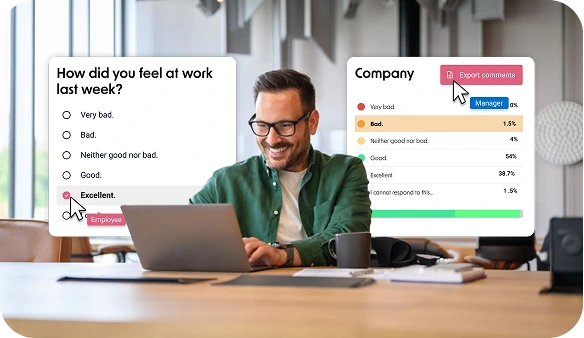
Weekly pulse surveys and structured 1:1 meetings are among the most effective early detection tools available to managers. Short, regular touchpoints catch problems when they are still manageable. Infrequent, lengthy reviews tend to miss the gradual decline that characterizes burnout.
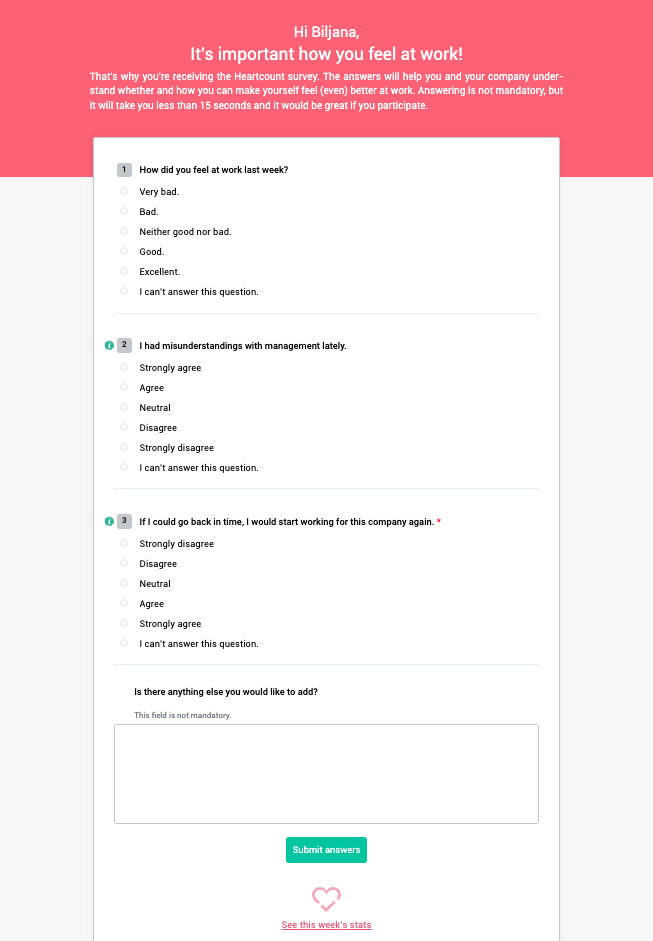
HeartCount uses rotating, research-backed questions in short weekly check-ins, designed to feel natural rather than burdensome, and surfaces real-time engagement data so managers can identify at-risk employees before they reach a breaking point.
Recognize and reward sustainably
Recognition reduces burnout risk meaningfully. Employees who feel genuinely valued for their contributions are more resilient under pressure. This does not require expensive programs — specific, timely verbal acknowledgment is consistently cited as more impactful than formal awards.
Encourage full use of time off
Model work-life balance at the leadership level. Managers who never take time off, respond to messages at midnight, and skip lunch unconsciously communicate that these behaviors are expected. Set clear expectations and actively encourage employees to fully disconnect during time off.
Building a burnout-resistant workforce
Employee burnout is not inevitable. Organizations that take a proactive approach: monitoring workload patterns, training managers to recognize early signals, conducting regular pulse surveys, and building a culture where asking for help is genuinely safe, consistently report lower burnout rates, better retention, and stronger team performance.
The 20 signs covered in this article are not a checklist to use once. They are a lens for how you engage with your team every week. The managers who catch burnout early are not those with special psychological training; they are the ones who pay attention, ask honest questions, and take the answers seriously.
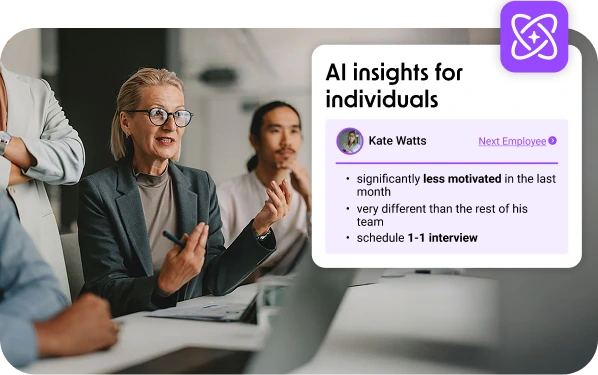
HeartCount helps you build that habit at scale. Track engagement trends, monitor employee well-being, spot early warning signs of burnout, and give your managers the data they need to intervene at the right moment, not after someone has already handed in their notice.
Ready to get ahead of burnout on your team?
HeartCount’s employee engagement platform gives managers real-time visibility into team wellbeing through short, weekly check-ins. Start your free trial and see the difference proactive monitoring makes.
FAQs
How can you tell when an employee is burnt out?
Look for a pattern of behavioral changes relative to the employee’s baseline, not a comparison to others. Key indicators include sustained decline in work quality, withdrawal from team interactions, increased absenteeism, visible exhaustion, and cynicism toward work they previously cared about. Three or more signs appearing together over several weeks warrant a direct conversation.
What are the three stages of burnout?
Most burnout research describes progression through three broad phases:
- Stress and overload (high demands, compensatory effort, early fatigue)
- Chronic symptoms (persistent exhaustion, mounting mistakes, growing cynicism)
- Full burnout (emotional detachment, significantly impaired performance, potential mental and physical health consequences)
Early intervention in stage one or early stage two produces the best outcomes.
What is the difference between burnout and stress?
Stress is characterized by too much: too many demands and not enough resources to meet them. Burnout is characterized by not enough: emotional emptiness, detachment from purpose, and a loss of motivation that persists even when the immediate stressors ease.
Stress can be energizing and is often temporary. Burnout is a chronic state that does not resolve simply by removing the source of pressure.
What jobs cause the most burnout?
Research consistently identifies healthcare workers, educators, HR professionals, community service workers, and mid-level managers as among the most at risk of burnout. However, burnout can occur in any role. Paychex research found that roles in transportation, warehousing, manufacturing, and medical care all reported majority burnout rates among surveyed employees. Job design, management quality, and organizational culture matter far more than industry alone.
Can burnout lead to a leave of absence?
Yes. According to Spring Health’s 2026 Workplace Mental Health Report, nearly two-thirds of HR leaders reported an increase in mental health-related leaves of absence over the past year. Untreated burnout can progress to clinical conditions, including depression and anxiety, that require formal medical leave. Early intervention by managers is the most effective way to prevent this outcome.