
Happiness at Work in 2026: What Drives It, What Kills It, and How to Measure What Actually Matters




-
1.The ROI of Happy Employees: Productivity, Retention, and Profitability
-
2.What HR Teams Use Happiness Metrics For
-
3.Happiness, Satisfaction, and Engagement: Why the Difference Matters
-
4.What Makes Employees Happy at Work?
-
5.What Causes Unhappiness in the Workplace?
-
6.How to Measure Employee Happiness
-
7.The HeartCount Loop: Listen, Diagnose, Act, Track
-
8.7 Practical Ways to Build a Happier Team
-
9.Happiness at Work in Hybrid and Remote Teams
-
10.FAQs: Happiness at Workplace, Answered




Most organizations know that unhappy employees are a problem. Fewer realize that their current data is not actually measuring it.
Satisfaction scores indicate whether people are satisfied with their package. Engagement surveys tell you how committed they are to their goals. Neither tells you how people genuinely feel about coming to work on Monday morning, and that gap is where performance, retention, and culture quietly erode.
Employee happiness at work is a measurable business indicator, and in 2026, the research behind it is hard to ignore.
In this guide, I’ll explain what drives it, what kills it, and what HR and People Ops teams can actually do about it, including how to measure it and get useful data to act on.

The ROI of Happy Employees: Productivity, Retention, and Profitability
The numbers are consistent across multiple independent sources.
- Research from the University of Oxford found that happy employees are 13% more productive than their less satisfied peers, with measurable effects on output even in high-pressure environments.
- Economists at the University of Warwick put the figure at 12% more productive, with unhappy employees performing up to 10% below average.
- According to Gallup, business units with high employee well-being see up to 21% greater profitability, 41% lower absenteeism, and 17% higher productivity.
- According to AIHR, companies that actively measure and respond to employee sentiment see up to 18% greater productivity, 40% lower turnover, and up to 250% revenue growth.
These are not soft signals. They are early indicators of organizational health, as meaningful as any financial metric.
Happy employees are more likely to:
- Stay longer, reducing costly turnover
- Show up fully and consistently
- Collaborate across teams more effectively
- Recommend their company to others, becoming informal brand ambassadors
In contrast, low morale leads to hidden costs: quiet quitting, reduced innovation, and the erosion of internal trust. That is why workplace happiness has moved from a culture conversation to a strategic imperative.
What HR Teams Use Happiness Metrics For
For People Ops teams working at the operational level, happiness metrics serve a practical function. They help you:
- Anticipate disengagement and prevent burnout before it surfaces in exit interviews
- Make the case for wellbeing investment with data, not anecdotes
- Benchmark how different teams, managers, or offices compare
- Spot which managers are creating the conditions for people to thrive
By using platforms that offer weekly pulse surveys and sentiment analytics, such as HeartCount’s employee experience tools, HR teams shift from reactive problem-solvers to people who anticipate problems.
Happiness, Satisfaction, and Engagement: Why the Difference Matters
Before acting on any of this, it helps to be clear on what you are actually measuring. Happiness, satisfaction, and engagement are not the same thing, and treating them as interchangeable is one of the most common mistakes HR teams make.
- Satisfaction is rational. It reflects whether the tangible parts of the job meet expectations: compensation, career path, job security, and fairness. An employee can be satisfied and still feel hollow about their work.
- Happiness is emotional. It reflects how people feel day to day: whether they find meaning in what they do, feel connected to their team, and have enough autonomy to work in ways that suit them.
- Engagement is behavioral. It describes how committed and involved someone is and how much discretionary effort they bring. A person can be happy but coast. They can be engaged but are burning out.
For a deeper look at how engagement is conceptualized, see HeartCount’s guide to the employee engagement model.
The practical implication: if you only measure satisfaction, you are tracking whether people are content with their package, not whether they are thriving. If you only track engagement, you see effort but miss what is sustaining or eroding it beneath the surface.
There is also a more uncomfortable signal worth naming. Research shows that 88% of C-suite leaders report that employee well-being is a priority in their organization, yet more than half of employees say their experience has not actually improved. That gap does not usually come from bad intentions. It comes from measuring the wrong things, or not measuring at all.
For a deeper look at what each of these measures is and how to design a survey that captures all three, see the guide to employee happiness surveys.

What Makes Employees Happy at Work?
Understanding what makes a happy workplace is not guesswork. While salary and perks still matter, long-term employee happiness is primarily driven by emotional and psychological factors: recognition, trust, autonomy, and a sense that the work means something.
Recognition and Psychological Safety
People feel happiest when their contributions are acknowledged and when they can speak up without fear of judgment. Recognition embedded into daily workflows, not just saved for annual reviews, builds both morale and performance.
Psychological safety enables open communication and innovation, and it is the foundation of a culture of belonging where people are valued for who they are, not just what they produce.
Autonomy, Purpose, and Growth
Happy employees have ownership over their work and understand how their role connects to something larger. Purpose deepens when people are trusted to shape how they work and given real access to development.
Clear growth conversations and structured feedback from managers are essential. Teams with managers who give timely, specific feedback retain people at significantly higher rates.
Flexibility and Work-Life Balance
Workplace happiness rises when people are trusted to choose when and where they work best. Organizations that support flexibility without micromanagement see lower stress and higher engagement. Flexible policies work best when paired with tools that flag early signs of imbalance, especially in remote settings.
Transparent Communication and Trust in Leadership
When leaders communicate clearly, involve employees in decisions, and follow through on commitments, teams feel safer and more aligned. Transparent workplaces report stronger retention and morale.
Physical Environment and Hybrid Preferences
Even in 2026, the physical space we work in continues to affect well-being. Light, noise, privacy, and ergonomic design influence mood and focus. A genuinely happy work environment provides the conditions people need to concentrate, collaborate, and recover throughout the day.
What truly moves the needle is offering people flexibility to choose the right environment for the task at hand. A central employee overview helps managers understand what each person needs, wherever they work.
What Causes Unhappiness in the Workplace?
Unhappiness at work rarely arrives dramatically. It builds quietly through vague expectations, inconsistent leadership, and unmet needs left unaddressed for too long.
Some issues do not directly create happiness when present, but their absence creates instability. These are not motivational drivers. They are the baseline conditions people need to feel secure and able to do their jobs properly.
- Unclear expectations leave people anxious about whether they are focused on the right things. Missing tools or resources make even simple tasks exhausting. Poor management, whether through micromanagement, lack of direction, or disrespect, erodes trust faster than almost anything else.
- Inadequate pay is a persistent stressor. Most people do not work solely for money, but feeling underpaid or financially insecure takes up cognitive space that should be devoted to other things. Job insecurity has the same effect.
- Unrecognized effort chips away at motivation. When someone consistently works hard and nobody notices, they start to question the point. A toxic culture, where there is favoritism, exclusion, or unresolved conflict, demoralizes even the most committed people on your team.
None of these things makes people love their work. But without them being in place, it is nearly impossible for anyone to feel genuinely engaged or energized.
The Hidden Signals HR Teams Miss
Many signs of unhappiness are subtle. Missed deadlines, low participation in meetings, and a sudden drop in feedback quality: these can point to a deeper issue that has nothing to do with capability. The early warning signs of an unhappy workforce are often emotional: feeling invisible, excluded, or uncertain about where things are heading.
There is also a newer pattern worth tracking. “Quiet cracking” describes the moment just before quiet quitting: employees who are still showing up and completing work, but are at a breaking point beneath the surface.
It is harder to detect than disengagement because the surface behavior has not changed yet. Pulse data and sentiment trends are often the first place it becomes visible.
Manager Behaviors That Quietly Erode Morale
Well-meaning managers can damage morale without realizing it:
- Micromanagement signals distrust.
- Inconsistent feedback creates confusion.
- Failing to recognize effort is one of the fastest ways to lose someone who was performing well.
Subtler trust-breakers are even more damaging: taking credit for teamwork, withholding context, or consistently avoiding difficult conversations. These behaviors weaken the psychological contract between teams and leadership. Once that trust is gone, it is very hard to rebuild.
Burnout, Overload, and Culture Debt
Some causes of unhappiness are structural. Unmanageable workloads, poor prioritization, and a lack of time for recovery create the conditions for burnout, a state of emotional exhaustion that kills motivation at its root.
When left unaddressed, burnout becomes cultural: more meetings, a permanent sense of urgency, and boundaries that quietly disappear. This is what some call “culture debt”- the invisible cost of not designing for sustainability.
HeartCount breaks down the core causes of burnout and what actually addresses them in depth.
How to Measure Employee Happiness
You cannot improve what you do not measure. Employee happiness might seem subjective, but it can be tracked through consistent, intentional feedback mechanisms, especially when tied to behavioral indicators like participation, initiative, and sentiment trends over time.
Pulse Surveys vs Annual Surveys
Annual surveys offer a snapshot. The problem is that by the time the data is analyzed and shared, the team has moved on, and the moment for intervention has passed.
Pulse surveys give you real-time visibility into what people are thinking and feeling, week by week. They surface patterns before they become problems, creating a faster feedback loop between employees and the people responsible for acting on what they hear.
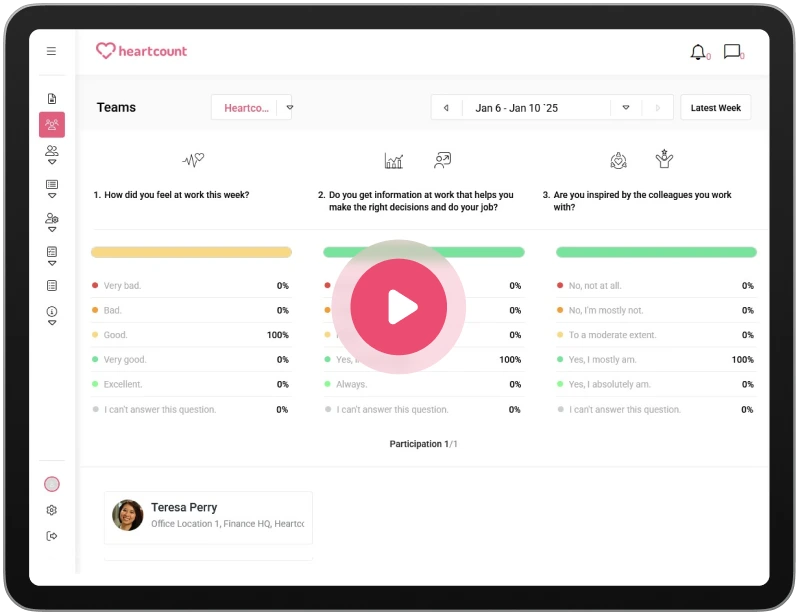
HeartCount’s automated pulse check surveys track emotional trends continuously, giving quick-read signals across departments and locations.
But surveys are only part of the picture. Listening also means noticing non-verbal signals: drops in initiative, sudden silences, or shifts in the language people use in open comments.
Three Metrics Worth Tracking
General satisfaction scores miss a lot. The most useful insights come from tracking the dynamics that actually drive engagement and well-being over time:
- Motivation: The drive to take initiative and stay committed. Both intrinsic and extrinsic motivators influence this score.
- Autonomy: A sense of ownership and control over one’s work. When people are trusted to make decisions, they are more satisfied, more productive, and less likely to leave.
- Emotional exhaustion: How depleted people feel. This metric is reverse-coded, so higher scores indicate lower exhaustion and a more sustainable environment.
Together, these three give a clearer picture of the emotional and behavioral dynamics shaping your workplace than a single engagement number ever could.
If you are ready to move from understanding to action, here is how to design an employee happiness survey that actually tells you something: which questions to ask, how often, and what to do with what you learn.

The HeartCount Loop: Listen, Diagnose, Act, Track
Sustainable happiness at work is not just about measurement. It is about what you do with what you learn. HeartCount is built around a continuous improvement model: Listen, Diagnose, Act, Track.
Listen: Weekly Sentiment Snapshots
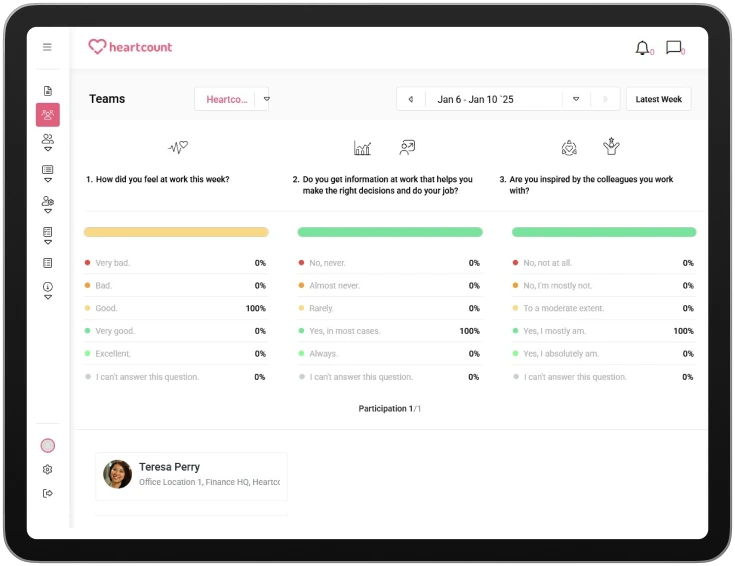
Weekly pulse surveys give teams a dynamic window into how people feel without overwhelming them with long questionnaires. Short, focused check-ins provide sentiment data that reveals patterns early and often. The advantage is consistency. When listening becomes a habit, feedback normalizes, and emotional bottlenecks reduce.
Diagnose: Spot Problems Before They Escalate
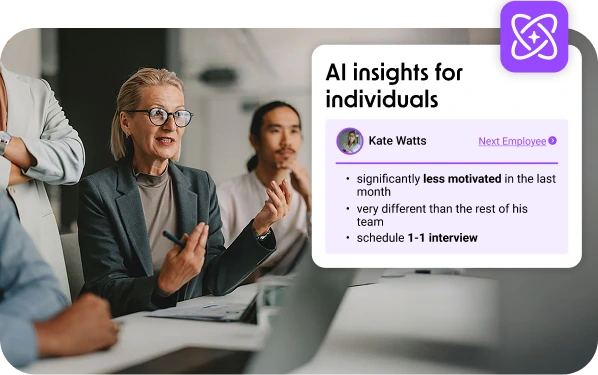
Once feedback is collected, the next step is to recognize patterns. HeartCount uses AI-powered risk scoring to flag burnout signals, disengagement, and signs of friction at the team level. This gives HR and managers the chance to intervene before problems escalate, not after someone has already decided to leave.
Act: Templates and Nudges That Make Change Easier
Data alone does not build a better culture. Action does. HeartCount supports managers with conversation templates, automated nudges, and team insights designed to quickly close the gap between insight and improvement. Instead of waiting for HR to own every feedback loop, managers are equipped to respond within their own teams.
For more on building manager accountability into your culture strategy, see HeartCount’s post on how to drive employee engagement.
Track: Close the Feedback Loop
Tracking shows what is working. Over time, changes in sentiment and morale highlight which interventions are making a difference, whether that is a new policy, a recognition initiative, or a shift in how managers communicate. Dashboards that visualize feedback trends make it easier to demonstrate the value of people initiatives.
This loop ensures employee happiness is not treated as a one-off program. It becomes a measurable process that adapts in real time.
7 Practical Ways to Build a Happier Team
Strategy and metrics matter. But workplace happiness is ultimately shaped by everyday actions. The most effective teams do not rely on annual wellness initiatives. They embed happiness into routines, rituals, and the way managers work day to day.
The goal is to create the conditions in which people consistently feel genuinely happy in the workplace, and to have the tools to increase employee happiness when signals shift.
Here are seven practical, evidence-based approaches.
1. Embed Recognition into Daily Routines
Do not save praise for annual reviews. Real-time, peer-driven recognition helps people consistently feel seen and valued. Whether it is a quick message or a structured kudos channel, frequent positive feedback builds trust and connection across the team.
HeartCount’s real-time kudos feed turns recognition into a habit rather than an occasion.
2. Give Managers Real-Time Nudges Based on Team Sentiment
Managers often want to support their teams but lack visibility into how people are actually feeling. Automated nudges based on weekly sentiment data prompt timely check-ins rather than reactive ones. This bridges the gap between feedback and action, especially in distributed teams.
3. Offer Career Growth Paths and Mentorship
People who see a future at your company are more likely to stay and contribute meaningfully. Make career development visible by outlining clear growth tracks, pairing people with mentors, and supporting internal mobility. These steps directly strengthen both retention and engagement, as explored in HeartCount’s post on employee engagement and retention.
4. Run Belonging Audits Quarterly
Belonging is measurable. Audit team dynamics every quarter: who speaks up, who stays silent, who is excluded from informal networks. Use survey data and manager observations together to identify gaps. This proactive approach helps build an environment where everyone can contribute fully.
5. Offer Flexible Work Options That Match How People Actually Work
A single hybrid policy does not fit everyone. People have different needs based on role, life stage, and how they work best. Design working models around personas, not just policies. Happy teams are the ones that are trusted to choose the right environment for the task.
6. Make Taking Time Off Culturally Safe
Encouraging PTO is one thing. Making it safe to actually use it is another. Model time off at a leadership level. Discourage always-on behavior. Avoid rewarding burnout. Even micro-breaks during the day matter. When leaders visibly prioritize recovery, teams feel permission to do the same.
7. Build Rituals That Bond Remote and Hybrid Teams
Shared rituals create rhythm and connection. Weekly win roundups, digital coffee chats, and team traditions: consistent moments of shared experience reduce isolation and build belonging across distributed teams. These work best when shaped by the team, not handed down from leadership.
Keeping Employees Happy in the Long Run
The seven strategies above address what you can do now. But increasing employee happiness over time requires an ongoing commitment to listening, responding, and improving the employee experience as the organization changes around it.
Flexible policies get outdated. Teams grow and shift. What creates a happy work environment in one season may not be enough in another. Building processes that surface new signals early and acting on them consistently is what separates organizations with a genuinely happy workplace from those that rely on annual initiatives and hope for the best.
For a broader look at how to improve employee experience systematically, see HeartCount’s guide on how to improve employee experience.
Take This Further
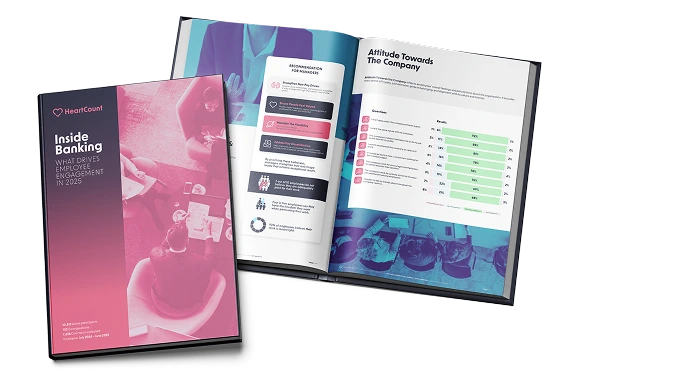
If these strategies resonate with you, our free eBook 10 Steps for Building a Strategy for Happiness at Work expands each principle into a practical implementation guide: what to do on day 1, what changes in month 3, and how to measure whether it is working. Built from what we have seen work across hundreds of teams using HeartCount.
Happiness at Work in Hybrid and Remote Teams
Remote and hybrid models are no longer experimental. They are reshaping what happiness at work looks like in 2026, and the data on their delivery is consistent.
- Research from Stanford University found that employees on a hybrid schedule maintained equal promotion and productivity levels while reducing turnover by 33%.
- A UK-wide survey by Mortar Research found that 86% of hybrid workers reported better work-life balance, 74% felt less drained, and 78% experienced less stress.
- The 2025 State of Remote Work Report by Neat found a 35-40% productivity boost among remote-capable employees.
Despite these benefits, hybrid models create real challenges around visibility. Disengagement is harder to detect when people are not physically present. Tools like automated pulse surveys are essential for spotting early sentiment shifts in distributed teams.
Happiness in hybrid setups is about the structure, culture, and leadership practices that support autonomy without creating isolation. Regular check-ins, virtual rituals, shared recognition, and asynchronous communication all preserve a sense of belonging across distance.
AI at Work: A New Variable in Employee Happiness
One more force is reshaping happiness in distributed teams: artificial intelligence (AI).
A 2025 global study by Jabra and the Happiness Research Institute found that employees who use AI tools daily are 34% more satisfied with their jobs and significantly more optimistic about the future of their work. AI removes repetitive tasks, freeing people to focus on the work that provides meaning and autonomy, two of the strongest drivers of happiness at work.
The complexity is real, though. The same study found that frequent AI users report up to 20% more stress than those who use it infrequently, largely driven by pressure to master new tools and concerns about job security. Only 30% of workers say their company is meaningfully AI-ready, which means many employees are absorbing the anxiety of AI adoption without yet experiencing its benefits.
For HR and People Ops teams, this creates a practical question: is AI being introduced in your organization as a tool that expands what people can do, or as pressure they are expected to absorb quietly?
The answer directly affects whether your team members feel happier or more stressed, in ways that will not show up until a pulse survey flags the pattern.
FAQs: Happiness at Workplace, Answered
What’s the difference between employee satisfaction and happiness?
Satisfaction is rational. It reflects whether the tangible parts of the job, such as salary, benefits, career path, and fairness, meet expectations. Happiness is emotional. It reflects how people feel about their work day to day, regardless of perks.
An employee can be satisfied but not happy (a good package, a monotonous role), or happy but not satisfied (loves the team, is underpaid). Both matter.
What’s the difference between engagement and happiness?
Engagement refers to how involved and committed employees are to their work and goals. Happiness reflects their overall emotional well-being at work.
Engaged employees are not always happy, and happy employees are not always highly engaged, but both are essential for long-term performance and retention.
What makes a happy workplace?
A happy workplace is one where employees feel valued, supported, and trusted. It includes clear communication, recognition, opportunities for growth, and a culture that respects individual needs and contributions. Psychological safety and a sense of purpose both play a central role.
How do you measure employee happiness?
You can measure employee happiness through regular pulse surveys, one-on-one conversations, and behavioral indicators such as engagement, participation, and feedback patterns. Tracking changes over time helps identify trends. The most useful metrics to watch are motivation, autonomy, and emotional exhaustion, tracked together rather than in isolation.
What are the signs of an unhappy workforce?
Early signs include emotional withdrawal, increased absenteeism, low morale, poor collaboration, and decreased productivity. Unhappy employees often disengage quietly, reducing input, avoiding feedback, or showing early signs of burnout before anything dramatic happens.
How can managers improve workplace happiness?
Managers account for 70% of the variance in team engagement. They can improve workplace happiness by regularly recognizing contributions, encouraging open dialogue, supporting career development, respecting boundaries, and modeling positive behavior.