

HeartCount vs Workleap: Comparing Engagement, Retention, and Employee Experience




-
1.TL;DR
-
2.HeartCount vs Workleap at a Glance
-
3.HeartCount vs Workleap: Comparison Table
-
4.Deep Dive into Key Features
-
5.Pricing & the Cost of Ownership
-
6.HeartCount vs Workleap: Which Is Better for SMBs, Mid-market, and Enterprise Teams?
-
7.When to Choose Heartcount Over Workleap?
-
8.Heartcount vs Workleap: Final Verdict




I created a HeartCount vs Workleap comparison to answer one simple question: which platform actually fits your organization’s goals? Both support employee engagement, surveys, feedback, and recognition, but they’re built with very different priorities. In this guide, I’ll compare their features to help HR teams decide what problem they’re trying to solve.

TL;DR
- HeartCount = engagement + retention specialist. Best for weekly pulse surveys, burnout risk alerts, and closed-loop employee feedback at a lower cost.
- Workleap = broader employee experience platform. Best if you want engagement connected to performance workflows and scalable team adoption.
My take: If retention and culture depth are the priority, pick HeartCount. If you want engagement + performance alignment in one platform, pick Workleap.
HeartCount vs Workleap at a Glance
When I compare HeartCount vs Workleap, I see two very different approaches to employee engagement and the overall employee experience.
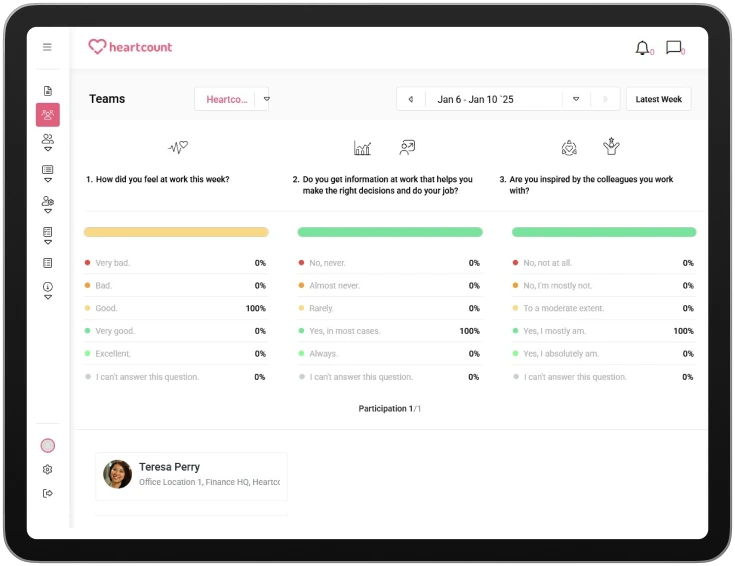
HeartCount is a focused listening platform built specifically for employee engagement, retention, and workplace culture health. It centers on short weekly pulse surveys, employee feedback, and predictive analytics that flag burnout early.
It’s designed for HR professionals and HR teams who want actionable insight into employee satisfaction and employee engagement scores without building a heavy HR tech stack. The communication module, recognition tools, customizable surveys, and strong employee-level risk alerts make it feel like a specialist platform.
If your main goal is to improve company culture and reduce turnover, HeartCount is very clear about that mission.
Workleap, on the other hand, combines engagement surveys, performance reviews, compensation management, peer recognition, and broader analytics into one connected system. When I look at it, I see a talent operating system rather than just an employee survey tool.
For HR leaders managing growing teams, especially in the United States or in larger distributed organizations that use tools like Microsoft Teams, Workleap feels structured and scalable. It’s less focused on deep psychological listening and more about integrating feedback, recognition, and performance into a single workflow.
In short, HeartCount is a specialist in engagement and retention. Workleap is a broader platform that connects engagement to performance and rewards. Which one makes sense depends on whether you want depth in listening or breadth across your HR systems.
HeartCount vs Workleap: Comparison Table
| HeartCount | Workleap | |
| Price (USD) | $2.50 per employee/month (annual). Free plan up to 25 employees. No forced bundles. | $5 per user/month per module (annual). Engagement, Performance, and Compensation are priced separately. |
| Free Entry-Level Plan | Permanent free plan including pulse surveys, recognition, AI insights, and eNPS. | No ongoing free tier. Only time-limited trials. |
| Transparent Surveys | Built around psychologist-designed engagement dimensions with clear methodology (well-being, autonomy, exhaustion, purpose). | Survey transparency exists, but it is positioned as one component within a broader HR suite. |
| Employee-Level Insights | Individual churn risk flagging and emotional exhaustion monitoring as a core retention feature. | Employee insights available through engagement and performance data, but not specialized in predictive retention modeling. |
| Weekly Automated Surveys | Weekly 30-second automated pulse surveys are the structural backbone of the platform. | Pulse surveys are configurable; not inherently designed around a weekly micro-survey cadence. |
| Two-Way Internal Communications Module | Structured anonymous communication threads built specifically for closed-loop psychological safety. | Anonymous feedback replies are available, but communication is not the central architectural pillar. |
| Advanced Reporting & Analytics | Engagement analytics grounded in Maslow, JD-R, Flow, and emotional drivers (motivation, autonomy, exhaustion). | Advanced analytics across modules; less specialized in psychological engagement modeling. |
| AI Risk Alerts & Action Plans | Predictive AI prioritizes at-risk individuals and flags churn risk early. Retention-first intelligence engine. | AI summarizes insights and suggests actions, but predictive churn modeling is not the primary focus. |
| Ease of Onboarding (according to Capterra & G2) | Faster deployment due to single-focus architecture. Minimal configuration. | Slightly more setup required due to a multi-module ecosystem. |
| Customizable Reports | Engagement-specific reports tailored to culture health and burnout detection. | Reporting is customizable across modules, but engagement reporting is less specialized. |
Deep Dive into Key Features
In this section, I’ll compare HeartCount vs Workleap strictly through the lens of employee engagement and employee experience. I’m not looking at compensation modules or full HR suites. I’m focusing only on the features both platforms actually share: engagement surveys, pulse survey structure, employee feedback, recognition, analytics, and retention insights. That way, we keep this comparison fair and useful for HR professionals evaluating real alternatives.
Core Employee Engagement
Both platforms offer strong employee engagement capabilities, but they’re built on very different philosophies. This is where the difference becomes clear.
HeartCount: Built Around Continuous Listening
HeartCount’s entire platform revolves around continuous employee engagement. The pulse survey structure isn’t just a feature; it’s the foundation of the system.
- Pulse survey structure
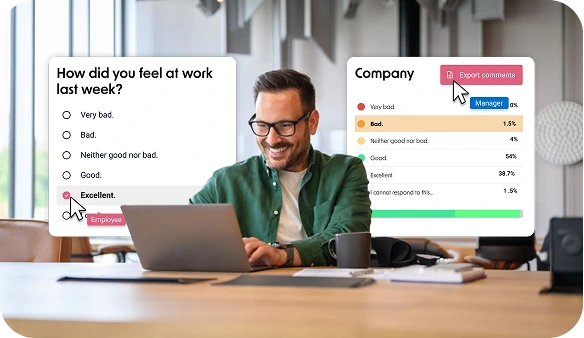
HeartCount uses short, psychologist-designed weekly pulse survey questions. They’re intentionally built to take about 30 seconds. From what I’ve seen, this reduces fatigue and keeps employee participation high. The structure focuses on core drivers like autonomy, emotional exhaustion, motivation, and relationships within the team. - Engagement surveys cadence
The cadence is weekly by design. That matters. Instead of running engagement surveys quarterly, HeartCount captures sentiment shifts in real time. This makes the analytics more dynamic and gives HR teams earlier warning signs around retention risks. - Employee engagement scores
HeartCount calculates employee engagement scores across defined dimensions of culture. These scores are broken down by team, department, and even individual risk level. I like that it doesn’t just show averages; it also highlights changes and flags patterns that affect organizational culture. - Participation design (length & frequency)
The surveys are short and automated. That’s intentional. I’ve noticed that when engagement surveys are long, employee feedback drops off quickly. HeartCount’s design makes participation feel light and routine, not like an administrative task.
How engagement ties to culture and retention
This is where HeartCount really leans in. Engagement isn’t treated as a surface metric. The platform connects employee engagement to retention through predictive analytics. It flags burnout and churn risk before they lead to resignation.
This is its strongest differentiator. The whole engagement model helps protect company culture and prevent turnover.
If your primary goal is improving employee satisfaction, workplace culture, and retention through continuous listening, HeartCount feels purpose-built for that mission.
Workleap: Engagement as Part of a Broader System
Workleap approaches employee engagement through its Officevibe module. It’s strong, but engagement sits inside a larger employee experience platform that also includes performance and compensation.
- Pulse survey structure
Workleap offers automated pulse survey functionality within Officevibe. The structure supports customizable surveys and employee feedback collection. However, it’s not rigidly anchored to weekly micro-surveys the way HeartCount is. Organizations have more flexibility in cadence. - Engagement surveys cadence
The cadence is configurable. HR professionals can run engagement surveys at intervals that fit their organization. This flexibility is useful for larger teams, but it doesn’t emphasize continuous weekly listening as strongly. - Employee engagement scores
Workleap provides engagement analytics, including eNPS and trend tracking. Employee engagement scores are presented alongside recognition data and performance signals. The analytics are solid, but they’re part of a broader dashboard that also tracks performance cycles. - Participation design (length & frequency)
Survey length can vary depending on configuration. Because Workleap serves multiple HR functions, engagement surveys are one component among many. Participation depends more on how the organization structures its feedback rhythm.
How engagement ties to culture and retention
Workleap connects engagement to performance management and compensation decisions. Instead of focusing primarily on predictive retention modeling, it integrates engagement data into the overall talent strategy.
In my opinion, this makes it powerful for structured HR leaders who want alignment between engagement, performance, and rewards, but it’s less specialized in churn prediction.
Employee Feedback & Communication
When I compare these two platforms in employee feedback and communication:
- HeartCount wins on psychological depth and structured dialogue. It feels purpose-built to strengthen culture and reduce retention risk through honest communication.
- Workleap wins on simplicity and integration. Feedback flows naturally into engagement and performance workflows without adding complexity.
Both support employee engagement and actionable analytics, but one leans into emotional nuance, while the other leans into operational efficiency.
HeartCount: Built for Psychological Safety and Depth
HeartCount treats employee feedback as the core engine of employee engagement:
- Anonymous employee feedback
HeartCount emphasizes anonymous feedback as a psychological safety tool. Employees can respond honestly without fear, which is critical for a healthy organizational culture. Anonymity is positioned as cultural protection. - Two-way communication module
The communication module is structured and central to the platform. Managers can respond directly to anonymous comments inside a protected environment. This isn’t just replying; it’s a dialogue that preserves confidentiality. - Threaded conversations
HeartCount supports threaded exchanges tied to specific surveys or feedback comments. That creates continuity. It allows a team to revisit issues, track progress, and avoid the “survey → silence” problem. - Feedback visibility
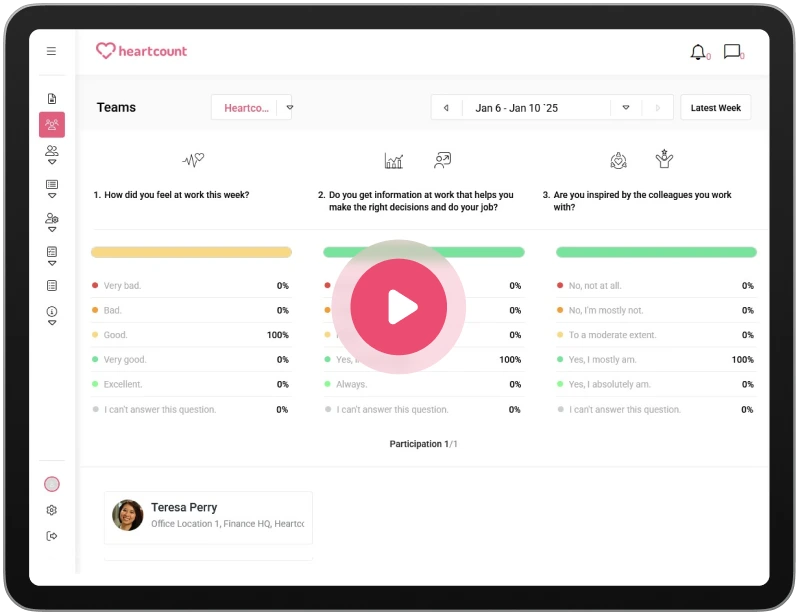
Feedback is visible in dashboards with engagement context. HR teams can see patterns across departments, while managers see their own team’s data. The analytics layer connects feedback to retention and culture signals. - Closed-loop response system
This is where I think HeartCount is strongest. The platform pushes managers to respond. It tracks whether feedback has been acknowledged and addressed. In my view, this closed-loop system turns surveys into action, which is what most employee survey tools fail to do.
If your main concern is protecting workplace culture and improving retention through honest communication, HeartCount feels intentionally designed for that depth.
Workleap: Streamlined Feedback Inside a Broader Workflow
Workleap handles employee feedback through Officevibe, but the approach is simpler and more workflow-integrated.
- Anonymous employee feedback
Employees can leave anonymous feedback within engagement surveys. The system supports confidentiality while allowing managers to respond. - Two-way communication module
Workleap enables replies to feedback, but it’s embedded within the broader platform. It doesn’t feel like a standalone communication engine, but a part of the engagement feature set. - Threaded conversations
Replies are supported, but the experience is lighter than HeartCount’s deeper threaded structure. The focus is clarity and speed rather than layered dialogue. - Feedback visibility
Feedback visibility connects with engagement analytics and performance insights. HR professionals can see trends across teams and track participation. Because Workleap integrates engagement with performance, feedback can influence review discussions. - Closed-loop response system
Workleap encourages responses and provides reminders, but the system is less explicitly framed around psychological safety architecture. Instead, it’s designed for efficiency: quick responses, integrated into daily workflows like Microsoft Teams.
Recognition & Peer Appreciation
When I compare recognition:
- HeartCount uses recognition to strengthen culture and retention through emotional connection.
- Workleap uses recognition as part of a broader performance and engagement system.
Both support employee engagement and positive workplace culture. The difference is depth versus integration. HeartCount leans into emotional culture building. Workleap leans into structural alignment across the organization.
HeartCount: Recognition as a Culture Signal
When I look at HeartCount, recognition feels closely tied to emotional engagement and retention.
- Peer recognition mechanics
HeartCount includes a recognition feature (often positioned as Praise or appreciation tools) where team members can acknowledge each other. It’s lightweight and directly connected to engagement surveys and feedback cycles. Recognition is treated as part of the listening loop. - Visibility of recognition
Recognition is visible inside the platform and contributes to employee engagement scores and overall culture analytics. It feeds into actionable analytics and retention insight. - Customizable rewards
Recognition is more appreciation-driven than reward-driven. There’s less emphasis on structured compensation-style incentives and more focus on reinforcing positive culture behaviors. - Integration with Microsoft Teams / Slack
HeartCount integrates with Microsoft Teams and Slack so recognition can happen where employees already work. This improves participation and keeps the platform embedded in daily workflows.
How recognition supports workplace culture
In my opinion, HeartCount treats employee recognition as a cultural stabilizer. It supports employee satisfaction and strengthens team relationships. Recognition contributes to a sense of belonging, which directly ties back to retention and organizational culture health.
If your organization views recognition as a cultural lever, HeartCount keeps it tightly connected to engagement and feedback.
Workleap: Recognition Inside a Broader Performance Ecosystem
Workleap includes peer recognition through its “Good Vibes” feature within Officevibe. It’s visible, structured, and well integrated into the broader platform.
- Peer recognition mechanics
Employees can send peer recognition cards to colleagues. It’s simple and designed to encourage regular participation. Recognition becomes part of everyday team interaction. - Visibility of recognition
Recognition is highly visible and integrated into engagement dashboards. Because Workleap connects engagement with performance, recognition can support review conversations and manager insights. - Customizable rewards
Workleap focuses more on structured reward alignment, especially when combined with its Compensation module. Recognition can complement broader reward systems, including pay discussions and performance evaluations. - Integration with Microsoft Teams / Slack
Workleap integrates directly with Microsoft Teams and Slack. Recognition notifications appear within communication channels, increasing visibility and adoption.
How recognition supports workplace culture
Workleap connects recognition to employee experience at scale. It supports culture, but also ties into performance management. In my view, this makes recognition more strategic inside larger organizations that want alignment between culture and measurable performance.
Analytics & Actionable Insight
When it comes to analytics:
- HeartCount works as a predictive retention engine. Focused, emotionally intelligent, deeply tied to engagement and burnout detection.
- Workleap is a broader analytics ecosystem. Connects engagement to performance and rewards inside a unified platform.
If I were choosing purely for employee engagement and retention, HeartCount feels more specialized. If I wanted engagement analytics integrated with performance management across a growing organization, Workleap feels more scalable.
Both deliver valuable insights. The difference is specialization versus breadth.
HeartCount: A Predictive Retention Engine
HeartCount’s analytics are built around one core idea: early detection. Everything flows from employee engagement data toward retention protection.
- Employee-level insight
HeartCount provides employee-level insight, especially around churn risk and emotional exhaustion. The platform flags individual employees who may be at risk. For me, this is where it stands out. - Actionable analytics
The dashboards are designed to convert feedback into actionable analytics. Instead of overwhelming HR teams with raw data, it highlights where intervention is needed first. That makes engagement feel operational, not theoretical. - Burnout and retention alerts
This is HeartCount’s strongest feature, in my opinion. It actively monitors burnout signals and retention risk patterns. The AI acts like an early warning system. That’s different from simply tracking employee engagement scores. - Dashboard clarity
The dashboards are focused and engagement-centered. You won’t find unrelated performance data cluttering the view. It’s clean, culture-driven, and designed for quick decisions. - Team-level comparisons
HR teams can compare teams, departments, and engagement trends across the organization. This helps identify which team dynamics are strong and where culture might be weakening. - Reporting depth
Reporting goes deep into emotional drivers like autonomy, motivation, and exhaustion. It’s psychologically grounded, which I personally think adds more context than surface-level engagement metrics. - Customizable reports
Reports can be customized around engagement drivers and retention themes. They’re built to support leadership conversations about employee experience and organizational culture health.
Workleap: Broader Engagement + Performance Analytics
Workleap’s analytics are broader because the platform connects engagement with performance and compensation. The scope is wider, but slightly less specialized in churn prediction.
- Employee-level insight
Workleap provides employee-level insight within engagement and performance contexts. Managers can view engagement trends alongside performance cycles and peer recognition activity. - Actionable analytics
The platform generates actionable insight across engagement and performance workflows. AI summarizes feedback, highlights trends, and suggests next steps. - Burnout and retention alerts
Retention risk isn’t the primary analytical engine, but engagement trends can surface potential risk areas. It’s less predictive and more trend-based compared to HeartCount. - Dashboard clarity
Dashboards combine engagement, performance, and recognition signals. For larger organizations, this unified view can be powerful. It shows how employee engagement connects to performance outcomes. - Team-level comparisons
Workleap supports team comparisons and trend analysis across the organization. HR leaders can track engagement surveys, feedback patterns, and performance cycles in one place. - Reporting depth
Reporting depth is strong, especially when combined with performance metrics. However, it’s less focused on psychological burnout modeling and more on integrated workforce performance analytics. - Customizable reports
Reports are customizable across modules. Engagement reports can be exported and shared, but customization spans multiple HR functions rather than being engagement-exclusive.
AI Capabilities
Both platforms use artificial intelligence (AI) to strengthen employee engagement and actionable analytics. The difference is intent:
- HeartCount uses predictive retention-focused AI. Built to detect burnout and flag at-risk employees early.
- Workleap has an AI-powered engagement workflow assistant. Built to simplify feedback analysis and support managers.
HeartCount’s AI protects retention. Workleap’s AI improves efficiency and decision-making across the platform.
HeartCount: AI as an Early Warning System
HeartCount uses AI primarily as a predictive retention engine. The goal isn’t automation, but prevention.
- AI risk alerts
This is where HeartCount is strongest. The platform actively flags employee-level churn risk and burnout signals. Based on participation shifts, sentiment changes in surveys, and engagement pattern drops, it identifies who may be at risk. I see this as a proactive retention safeguard rather than just reporting. - AI-generated summaries
HeartCount summarizes engagement surveys and employee feedback into focused dashboards. Instead of raw data, you get condensed engagement insight tied to emotional drivers like autonomy or exhaustion. - Suggested action plans
The system recommends the next steps based on engagement patterns. These aren’t generic suggestions; they’re tied to specific team trends. For HR teams managing multiple departments, this reduces guesswork. - Engagement trend detection
Because HeartCount runs weekly pulse survey cycles, its AI can detect trend shifts quickly. If employee engagement scores drop even slightly, the system highlights it before it becomes a company culture issue. - Always-on signals
The platform is “always listening.” Continuous engagement surveys feed a live analytics layer. That constant flow of feedback creates ongoing retention signals rather than static quarterly reports.
Workleap: AI Integrated Across Engagement Workflows
Workleap’s AI capabilities inside engagement are broader but less specialized in churn prediction.
- AI risk alerts
Workleap doesn’t position AI primarily around predictive retention alerts. Instead, it surfaces engagement patterns and performance signals that may indicate broader team friction. - AI-generated summaries
This is one of Workleap’s strengths. It summarizes employee feedback, engagement surveys, and comments into digestible themes. For busy HR leaders, that saves time. - Suggested action plans
The platform suggests action steps tied to engagement survey results. These are often connected to performance conversations or peer recognition opportunities. The AI helps managers translate insight into action without deep data analysis. - Engagement trend detection
Workleap tracks engagement trends over time and highlights changes across teams. The analytics connect engagement, feedback, and recognition patterns inside one dashboard. - Always-on signals
If using Workleap AI+, organizations can access continuous insight across engagement tools. The system connects feedback, surveys, and performance signals to provide ongoing visibility, though it’s not as retention-specific as HeartCount.
Pricing & the Cost of Ownership
If you’re an SMB focused primarily on employee engagement, employee feedback, retention, and improving company culture, HeartCount is more cost-efficient.
If you’re a growing organization that wants engagement integrated with performance management within a single scalable platform, Workleap may justify the higher cost.
HeartCount: Low Barrier, Clear Scaling
HeartCount’s pricing structure is simple and predictable.
- Starter plan: Free up to 25 employees
- Business plan: $2.50 per employee/month (annual billing)
- Enterprise: Custom pricing
For an organization focused on employee engagement and retention, this is one of the lowest entry points in the market.
The free tier is permanent, not a trial, and it includes:
- Unlimited pulse survey & customizable surveys
- Employee recognition
- AI insights and analytics
- eNPS tracking
- Individual risk flagging
- Feedback responses
That’s unusually generous. Most employee survey tools limit analytics or AI features behind paywalls. There’s no forced minimum beyond the 25-employee free cap. That makes it extremely accessible for startups and growing teams.
The Business tier supports up to 500 employees at a predictable per-employee rate. Enterprise plans add benchmarking, custom integrations, CSM, and enhanced security.
In my opinion, HeartCount scales cleanly without forcing companies into bundles. If your organization primarily needs employee engagement, feedback, recognition, and actionable analytics, the cost structure is very efficient.
From a cost-of-ownership perspective, it’s lean. No setup fees. Minimal onboarding time. Lower administrative complexity.
Workleap: Modular, Professionalized Pricing
Workleap’s pricing reflects its broader platform strategy.
Entry pricing
Officevibe (engagement module): $5 per user/month (annual billing), 10-user minimum
So right away, the entry point is double HeartCount’s Business tier.
Workleap does not offer a permanent free plan. You can start for free, but long-term use requires an upgrade. That’s typical for a more structured HR platform, but it does increase early commitment.
There is a 10-user minimum for Officevibe and Performance. That means even small teams must meet baseline thresholds.
Workleap scales well for mid-market and larger organizations. Because engagement connects with performance and recognition workflows, the platform grows with HR infrastructure needs.
However, the cost increases as you add modules. If an organization later adds Performance, the bundle cost rises to $8 per user/month. AI+ upgrades can add additional costs.
From a cost-of-ownership perspective, Workleap is more structured and potentially more expensive, but it consolidates multiple systems into a single platform.
HeartCount vs Workleap: Which Is Better for SMBs, Mid-market, and Enterprise Teams?
When I compare HeartCount vs Workleap, I don’t think the real question is “Which platform is better?” It’s more about which organization you are and what problem you’re solving.
Both platforms support employee engagement, employee feedback, recognition, surveys, and analytics. But the fit changes depending on company size, structure, and HR maturity.
Let’s break it down by segment.
| Segment | HeartCount | Workleap |
| 🟢 SMBs (Startups, <100 employees) | Free plan up to 25 employees $2.50 per employee/month Weekly pulse survey structure Strong employee engagement focus Built-in retention & burnout alerts Minimal setup and fast onboarding Simple recognition & feedback loop Ideal for small HR teams or founders | $5 per user/month 10-user minimum Engagement via Officevibe Recognition + surveys integrated Performance module available if needed Slightly more structured setup Better if you plan formal performance cycles early |
| 🟡 Mid-Market (100–500 employees) | Strong engagement surveys and actionable analytics Predictive retention engine scales well Team-level comparisons across the organization Advanced reporting in the Business tier Great for culture-first organizations Less built-in performance infrastructure | Engagement + performance integration 360-degree review support AI-generated summaries Strong HRIS integrations Structured workflows for managers Better alignment between engagement & performance |
| 🔵 Enterprise (500+ employees) | Enterprise tier with custom integrations Dedicated CSM & benchmarking Strong retention analytics at scale Focused engagement platform layered onto existing systems Best if performance tools already exist | Broader talent platform (engagement + performance) Deeper HRIS ecosystem Scalable reporting and dashboards SOC2 & compliance readiness Suitable for complex org structures Better for consolidating multiple HR systems |

When to Choose Heartcount Over Workleap?
If I strip it down, I’d choose HeartCount over Workleap when the priority is focused employee engagement and retention, not building a full HR ecosystem.
Here’s when HeartCount makes more sense:
- Retention is your biggest risk
You want AI risk alerts, burnout detection, and early churn signals tied directly to employee feedback and engagement surveys. - You believe in continuous listening
Weekly pulse survey cadence gives you ongoing engagement data instead of quarterly snapshots. - You want a specialist, not a suite
HeartCount is a dedicated engagement platform. It doesn’t try to replace performance systems; it strengthens culture and retention. - Budget matters (especially for SMBs)
Free plan up to 25 employees and $2.50 per employee/month keeps the cost of ownership low. - You already have performance tools
If your organization already runs structured performance reviews, HeartCount layers on as an engagement engine without overlap. - Psychological depth matters to you
If you care about employee satisfaction, culture health, and emotional drivers like autonomy and exhaustion, HeartCount feels more intentional.
In short: Choose HeartCount when engagement and retention are the main problem you’re solving, not performance consolidation.
Heartcount vs Workleap: Final Verdict
After researching both platforms closely, I don’t think the HeartCount vs Workleap comparison is a “winner vs loser” situation. It’s a question of focus vs breadth.
If your organization’s main priority is employee engagement, retention, and protecting workplace culture, HeartCount feels sharper. It’s built around continuous pulse surveys, predictive burnout alerts, and structured employee feedback. The analytics are focused. The pricing is accessible. The platform does its main job very well: listening and turning engagement into actionable insight.
If you’re looking for a broader employee experience platform that connects engagement with performance workflows, recognition systems, and structured review cycles, Workleap makes more sense. It’s stronger in integration, infrastructure, and scaling across a larger organization.
The smartest move? Book a demo. When you see the dashboards, analytics, and feedback workflows in action, the right choice usually becomes obvious.