

25 Employee Growth & Development Ideas + Free Plan Template (2026)




-
1.What Is an Employee Development Plan and Why Does It Matter
-
2.How to Develop Career Paths for Employees: A Starting Framework
-
3.25 Employee Growth and Development Ideas for 2025
-
4.How to Improve Employee Skills: Choosing the Right Ideas for Your Organization
-
5.Summary: All 25 Ideas at a Glance
-
6.Aligning Employee Growth and Development with Business Goals
-
7.Conclusion
-
8.FAQs




“The only thing worse than training your employees and having them leave is not training them and having them stay.” — Henry Ford
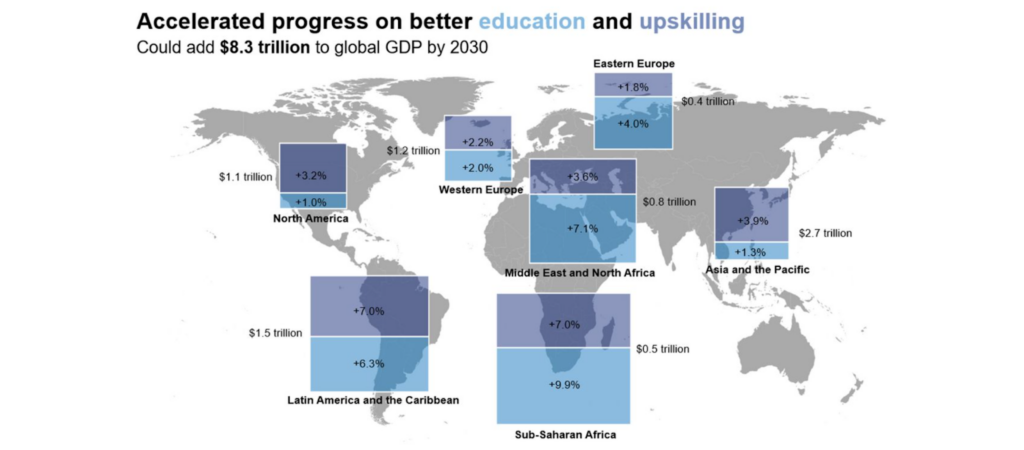
39% of your workforce’s skills will be outdated within five years. Not eventually. Within five years.
Most organizations respond to that statistic by scheduling a training session after performance drops, or revisiting development plans once a year during annual reviews. By then, the gap is already costly.
In this article, I cover 25 employee growth and development ideas that work proactively, so you’re building capability before you need it, whether you’re managing a five-person team or a 5,000-person enterprise.
What Is an Employee Development Plan and Why Does It Matter
An employee development plan is a structured roadmap that outlines how an individual will build new skills, close performance gaps, and advance toward their career goals, while contributing to the organization’s objectives. It typically includes a current-state skills assessment, defined learning activities, a timeline, and measurable milestones.
Unlike one-off training sessions, a strong employee development plan treats growth as a continuous, collaborative process between the employee and their manager. The data makes the case clearly:
- 74% of employees are keen to learn new skills to keep pace with their industry, but only 54% feel they have sufficient opportunities to do so
- Companies that invest more in quality training see 24% higher profit margins than those that spend less
- The skills gap is now the single biggest barrier to business transformation, cited by 63% of employers
A well-designed plan addresses four dimensions of growth:
- Technical skills: Role-specific competencies (data analysis, coding, product knowledge)
- Soft skills: Communication, adaptability, collaboration, and time management
- Leadership capabilities: Decision-making, strategic thinking, bench strength development
- Career trajectory: Lateral moves, promotions, or deepening expertise in a specialist track
Individual Development Plan Example
The table below shows what a practical individual development plan (IDP) looks like for a single employee. Use this as a starting template that managers can adapt per role.
| Component | Example |
|---|---|
| Current role | Marketing Manager |
| Career goal (12 months) | Senior Marketing Manager |
| Skill to develop | Data analysis & reporting |
| Learning activity | LinkedIn Learning: Data Analytics for Marketers (4 hrs) |
| Stretch assignment | Lead Q3 campaign performance analysis |
| Mentor | Head of Analytics |
| Check-in frequency | Monthly with the manager |
| Success metric | Deliver data-led campaign report by Q4 |
How to Develop Career Paths for Employees: A Starting Framework
Before diving into specific ideas, managers and HR teams need a framework to connect individual ambitions with organizational needs: employee journey maps. Here’s a lightweight process that works for teams of any size:
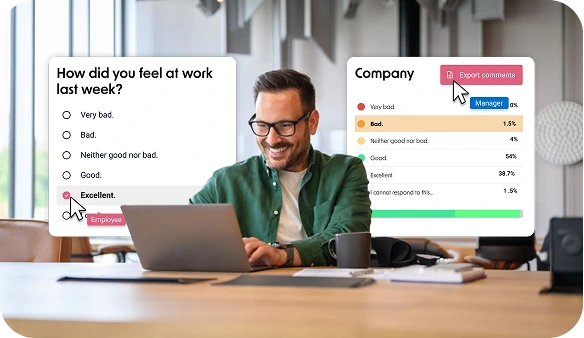
- Assess current skills: Use self-assessments, 360-degree feedback, or HeartCount pulse checks to understand where employees are today.
- Define future skill needs: Map the capabilities your organization will need over the next 12–24 months to support business goals.
- Identify the gap: Pinpoint where individual skill sets and organizational needs don’t yet align.
- Co-create the plan: Work with each employee to build a personalized development roadmap (not just a list of courses).
- Track, adjust, repeat: Set regular check-in cadences and treat the plan as a living document.
25 Employee Growth and Development Ideas for 2025
The ideas below span different learning styles, budgets, and organizational contexts. Most can be implemented without large budgets; the harder part is making them consistent.
1. Personalized Learning Paths
Personalized learning paths are tailored educational journeys that align each employee’s career goals with organizational objectives. Rather than sending everyone through the same training catalog, you design unique sequences of courses, mentoring sessions, and stretch projects for each person.
Example: Deloitte’s research highlights the value of a strong learning culture, noting that organizations with this focus achieve retention rates 30–50% higher. Their own Deloitte University is a flagship example, building leadership skills and capabilities like social intelligence and resilience alongside hard technical skills.
How to implement: Start by assessing each employee’s career goals and current skill levels through a combination of manager conversations and structured self-assessments. Build a custom plan using a Learning Management System (LMS) and review it quarterly. Use HeartCount’s custom surveys to regularly capture whether employees feel their learning is relevant and on track.
2. Mentorship Programs
Mentorship programs pair less experienced employees with seasoned professionals for structured knowledge transfer and career guidance. Done well, they accelerate skill development, expand professional networks, and create strong retention hooks — especially for high-potential employees.
Example: Mentees are 5x more likely to be promoted than employees without a mentor, and retention rates for mentees sit at 72% vs. 49% for non-participants. A compelling recent example: after T-Mobile launched a company-wide mentoring program post-merger, participants had a 78% retention rate vs. 41% among non-participants, and were 26% more likely to advance in job level within 12 months.
How to implement: Define program objectives first. Match mentors and mentees based on career aspirations, not just seniority. Train mentors on active listening and feedback. Schedule structured monthly check-ins with a defined agenda to prevent sessions from drifting into casual conversation.
3. Cross-Departmental Projects
Cross-departmental projects expose employees to different business functions, broaden their understanding of how the organization works, and build the cross-functional collaboration skills that are increasingly in demand. This is one of the highest-impact and lowest-cost growth opportunities in a company.
Example: Google’s 20% Time initiative (allowing employees to spend one-fifth of their time on projects outside their primary role) generated some of the company’s most significant product innovations, including Gmail and Google News. The collaboration byproduct: employees develop lateral thinking, new relationships, and a stronger sense of ownership.
How to implement: Identify projects that would benefit from diverse input. Select participants from at least two different functions. Set clear deliverables and timelines, and build in a debrief session to explicitly capture learning.
4. Employee-Led Workshops and Training
Employee-led workshops leverage internal expertise that often goes untapped. When employees teach, two things happen: the presenter deepens their own mastery (the protégé effect), and the audience gets relevant, contextual knowledge from someone who actually uses the skill day-to-day.
Example: Zappos’ internal “Zappos Insights” platform is a widely cited example in which employees lead sessions on customer service, culture, and team-building — content that participants consistently rate as more actionable than externally sourced training.
How to implement: Identify employees with deep expertise in areas that have wide applicability. Provide a simple content template. Offer a small incentive (recognition, a development credit) and publish a session calendar so employees can plan ahead.
5. Continuous Feedback and Development Check-Ins
Continuous feedback replaces the outdated annual-review model with regular, structured conversations between employees and managers. When development is discussed frequently, employees adjust faster, managers catch issues early, and growth stays aligned with business needs.
Example: The data make the manager’s role undeniable: 70% of the variance in team engagement is attributable to the manager, meaning the highest-leverage action any organization can take is ensuring managers have regular, high-quality development conversations.
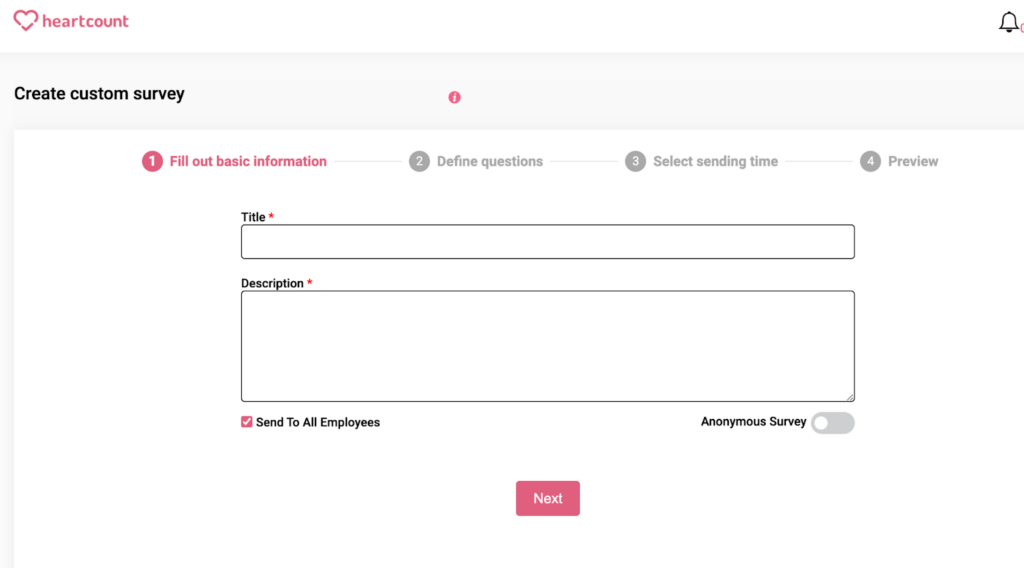
How to implement: Schedule bi-weekly or monthly one-on-ones with a standing development agenda item. Document feedback and track improvements over time. HeartCount’s automated pulse checks and custom surveys give managers structured data on employee growth needs on a weekly basis, so check-ins are informed rather than anecdotal.
6. Microlearning Opportunities
Microlearning delivers content in short, focused segments — typically 3 to 10 minutes — that fit into the flow of a workday without requiring employees to block off half a day for training. It’s particularly effective for reinforcing skills over time rather than introducing entirely new concepts in one sitting.
Example: Walmart uses microlearning through its Academy app to deliver targeted training directly to employees on the retail floor. Employees gain knowledge in real time, without being pulled off-site, dramatically reducing both the cost and the disruption of traditional training.
How to implement: Develop brief modules on specific, high-frequency topics (a new tool, a compliance update, a customer service technique). Make them available on mobile. Track completion rates and follow up with a brief quiz or pulse question to confirm retention.
7. External Learning and Certification Programs
Supporting employees in earning external certifications signals that the organization takes their long-term career seriously — not just their performance in the current role. It also builds the bench strength of specialized knowledge that most organizations struggle to develop internally.
Example: Intel’s Tuition Assistance Program offers financial support of up to $10,000 per employee per year for higher education and professional certifications in technology, leadership, and business. This is directly linked to higher internal mobility and stronger talent retention.
How to implement: Identify the most high-value external certifications for each function (e.g., PMP for project managers, Google Analytics for marketers, AWS certifications for engineers). Provide full or partial reimbursement, require employees to share learnings with the wider team after completion, and integrate the new credential into their development roadmap.
8. Job Rotation and Stretch Assignments
Job rotation and stretch assignments are among the most effective ways to develop employees to their full potential. Stretch assignments put employees in situations just beyond their current capabilities — enough to challenge and grow them without setting them up to fail.
Example: Unilever’s Future Leaders Programme is a widely recognized example: participants rotate through multiple functions and geographies, building a rounded understanding of the business that prepares them for leadership roles and reduces reliance on external executive hires.
How to implement: Identify roles or projects suitable for rotation and map them to employees’ stated career goals. Provide structured support during the assignment: a dedicated mentor, clear objectives, and regular check-ins. You will ensure that employees gain the most from the experience rather than just filling a seat.
9. Leadership Development Programs for Employees
Almost 60% of first-time managers have never received any training when transitioning into leadership. That gap is one of the most expensive and most preventable failures in employee development.
Leadership development programs build the skills that prepare employees for more senior roles: strategic thinking, decision-making, people management, and bench-strengthening within their own teams.
Example: PepsiCo’s Global Leadership Development Programme combines classroom learning, on-the-job training, and coaching for high-potential employees. Their Leadership and Organizational Management (LOM) initiative saved approximately $950,000 by eliminating regional duplication through a unified global curriculum and an additional $853,000 in delivery fees.
How to implement: Design a curriculum that includes both technical leadership skills (data-driven decision-making, financial literacy) and behavioral skills (psychological safety, delegation, active listening). Select participants based on demonstrated potential and manager nomination. Evaluate the program annually against measurable outcomes: internal promotion rates, 360-degree feedback scores, and engagement data.
10. Collaborative Learning Platforms
Collaborative learning platforms create a shared space for employees to exchange knowledge, share resources, and learn from each other’s experiences. Unlike traditional LMS platforms, which are top-down in design, collaborative platforms are peer-driven — content comes from employees as much as from the L&D team.
Example: Unilever uses Degreed to facilitate skill development and knowledge sharing across the organization. Peer-to-peer learning has driven significant increases in engagement and job satisfaction, with employee-created content on the platform growing year-over-year.
How to implement: Choose a platform that allows employees to create and share content, not just consume it. Seed it with high-quality internal content to start, then incentivize contributions through recognition. Monitor engagement monthly and highlight top contributors in company communications.
11. Innovation Challenges and Hackathons
Innovation challenges and hackathons are structured events that encourage employees to tackle real problems creatively and collaboratively. They develop skills that are hard to train in a classroom: rapid prototyping, cross-functional collaboration, pitching ideas under time pressure, and iterating on feedback quickly.
Example: Mastercard runs regular hackathons and Sandbox Challenges focused on payment technology innovation. Their Chief People Officer has partially attributed Mastercard’s 12.6% revenue growth and $25.7 billion in annual revenue to its culture of employee-driven innovation.
How to implement: Anchor each challenge to a real business problem. Invite cross-functional teams of 3 to 5 people. Build in structured time for prototyping, peer feedback, and a formal presentation. Celebrate all participants, not just winners.
12. Wellness and Resilience Programs
Only 20% of U.S. employees are engaged in 2026, which is the lowest level in a decade. Development that ignores burnout, stress, and mental health ends up building skills that employees can’t consistently apply because they’re depleted.
Example: Barclays’ “This Is Me” campaign tackled stigma around disability and mental health by encouraging colleagues to share personal stories. It grew to reach over 900,000 employees across 500 organizations. Its 10th anniversary in 2023 saw a 100% increase in employees openly discussing their mental health conditions.
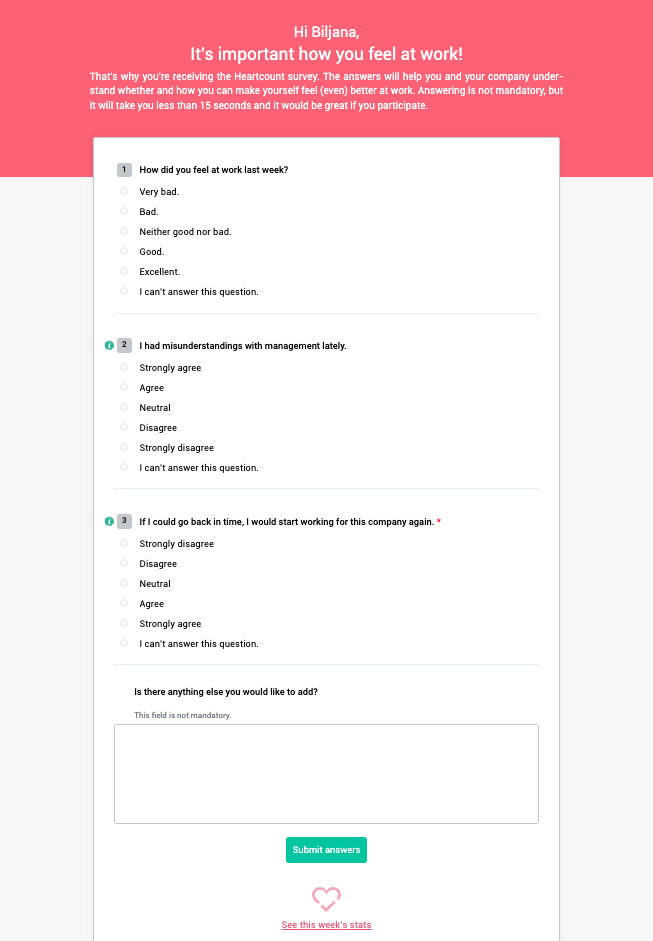
How to implement: Start by measuring well-being honestly. HeartCount’s automated weekly pulse checks give HR managers a continuous read on employee well-being rather than a once-a-year snapshot. From there, build programs that address the specific stressors your data surfaces: flexible working, stress management resources, on-site or virtual wellness classes, or access to mental health support.
13. On-Demand Learning Resources
On-demand learning puts employees in control of their own development timeline. Rather than scheduling training around organizational convenience, employees access content when they have a specific need or a natural learning moment, which dramatically improves retention and application.
Example: Google’s internal “g2g” (Googler-to-Googler) platform offers a wide library of on-demand training materials, including mentoring sessions and recorded courses. The platform is largely employee-run, making it both cost-effective and highly relevant.
How to implement: Build a library of online courses, recorded webinars, and short explainer videos. Curate external resources (LinkedIn Learning, Coursera, YouTube channels) alongside internal ones. Track usage patterns and survey employees quarterly on content relevance to keep the library from going stale.
14. Performance-Based Development Plans
Performance-based development plans connect individual growth directly to measurable business outcomes. Rather than treating learning as a separate activity from performance management, this approach treats them as one integrated system.
Example: Adobe’s “Check-In” program replaced annual reviews with continuous, structured conversations between employees and managers. The shift to ongoing feedback and forward-looking development discussions has improved both employee satisfaction and quality of performance outcomes.
How to implement: Set clear, measurable development goals linked to specific KPIs or OKRs. Design learning activities directly tied to achieving those goals. Review progress monthly, not annually. Use HeartCount’s custom survey functionality to capture whether employees feel their development is helping them perform better.
15. Recognition and Rewards for Learning Achievements
Recognition of learning achievements creates a positive feedback loop: when employees see that development is celebrated rather than expected, they invest more in it. This is particularly important for informal and self-directed learning, which often goes unacknowledged.
Example: Cisco’s Connected Recognition program is funded at 1% of payroll — a meaningful organizational commitment that signals learning is valued as much as output.
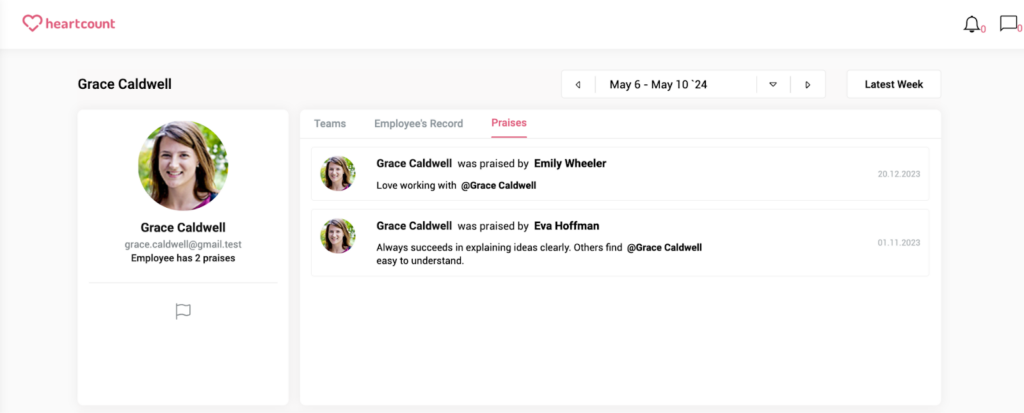
How to implement: Establish a recognition program that includes certificates, bonuses, or public acknowledgment for development milestones. HeartCount’s Peer Recognition feature lets employees send and receive kudos that are visible company-wide, and gives HR managers insight into who is actively developing and contributing to others’ growth.
16. Virtual Reality (VR) and Augmented Reality (AR) Training
VR and AR training create immersive, hands-on environments where employees can practice high-stakes scenarios without real-world consequences. While the investment is higher than most other methods on this list, the learning outcomes, particularly for technical, safety-critical, or customer-facing roles, can be dramatic.
Example: Ford has moved beyond prototypes to full-scale XR integration for technician training and prototyping. The result: technicians learned complex repair procedures 45% faster with VR than with traditional methods. Additionally, the use of AR in manufacturing led to a 32% increase in productivity by reducing errors and rework.
How to implement: VR/AR is most cost-effective for high-frequency training scenarios with significant downside risk (safety procedures, complex technical tasks, high-stakes customer interactions). Start with an off-the-shelf simulator if a custom solution is out of budget. Evaluate effectiveness through post-training assessments and employee feedback.
17. Gamification of Learning
Gamification incorporates game mechanics, such as points, badges, leaderboards, and challenges, into training programs to boost engagement, motivation, and completion rates. It’s particularly effective for content that employees find dry or low-urgency, such as compliance training or technical certifications.
Example: Deloitte’s Leadership Academy achieved a 50% faster curriculum completion time and a 46.6% increase in daily returning users after gamifying its leadership training. KPMG saw direct business impact: a 25% increase in fee collection and a 22% boost in new business following gamified training.
How to implement: Start by gamifying a module that employees consistently skip or fail to complete. Add a visible leaderboard, a completion badge, and a small reward for finishing. Track whether completion rates and knowledge retention improve before scaling the approach.
18. Peer Coaching and Skill-Sharing Circles
Peer coaching and skill-sharing circles create structured, low-cost forums for employees to mentor one another and exchange expertise. Unlike formal mentorship programs, which are typically hierarchical, skill-sharing circles are lateral; everyone has something to teach and something to learn.
Example: By moving from traditional training to peer-led coaching circles, the Saudi Electricity Company (SEC) achieved $26.6 million in operational cost reductions through OPEX optimization projects directly sparked within these coaching sessions. They also maintained a 98% retention rate among leaders participating in the circles.
How to implement: Identify 4–6 high-value skill areas with sufficient internal expertise and organizational demand. Recruit volunteer facilitators and provide a simple session template. Run monthly 60-minute sessions, rotate topics, and keep it informal enough that participation feels like a perk rather than an obligation.
19. External Networking Opportunities
External networking helps employees build industry connections, gain exposure to how other organizations solve similar problems, and bring fresh ideas back to the team. It’s one of the most underrated professional development ideas for employees. The ROI is harder to measure, but the long-term benefits to individual and organizational knowledge are significant.
Example: Rather than sending 10 people to a single expensive “mega-conference” in Las Vegas, companies in 2026 use AI-powered matchmaking platforms to send smaller teams to “Micro-Conferences” or “Secondary Market” events. Data shows these smaller, more intimate industry gatherings result in 40% more “meaningful connections” compared to large-scale events
How to implement: Provide a budget for employees to attend one to two industry events per year. Require a brief written or verbal debrief after attendance so the learning is shared organisationally. For employees who can’t travel, budget for virtual conference access or professional association memberships as alternatives.
20. Customized Development Plans Based on Employee Feedback
Customized development plans acknowledge that there’s no one-size-fits-all growth path. By grounding plans in regular employee feedback rather than manager assumptions, organizations build development programs that employees actually want to participate in, not ones they endure.
Example: IBM’s AI-powered “Your Learning” platform provides personalized training suggestions based on each employee’s role, career objectives, and previous learning history. It also surfaces emerging skills in high demand, helping employees stay ahead of the curve.
How to implement: The prerequisite is a mechanism for regularly collecting employee feedback on development needs and preferences. HeartCount’s custom surveys allow HR teams to ask structured questions about career goals, skill gaps, and learning preferences at scale, then use that data to inform individual and team-level development plans.
21. Interactive Workshops and Simulation Exercises
Interactive workshops and simulations give employees hands-on experience with real-world scenarios in a structured environment. Unlike passive classroom learning, simulations require employees to make decisions, handle consequences, and iterate — building much deeper competency than being told what to do.
Example: UPS partnered with Massachusetts Institute of Technology and Virginia Tech to build “Integrad,” a simulation-based driver training program using a full “replica city.” A 2025–2026 evaluation showed drivers were better at anticipating hazards, with a 40-minute simulation replacing weeks of classroom training. These gains translated into real performance, with UPS drivers dominating the National Truck Driving Championships and crediting the simulations for their precision.
How to implement: Design simulations around real challenges your employees face — customer escalations, difficult performance conversations, technical troubleshooting. Use external facilitators for specialized content. Always build in a structured debrief: the reflection after the simulation is where the learning is consolidated.
22. Collaborative Problem-Solving Sessions
Collaborative problem-solving sessions bring together employees from different functions to tackle specific organizational challenges. They develop teamwork, creative thinking, and the ability to synthesize diverse perspectives, skills increasingly central to how modern organizations create value.
Example: LEGO turned collaboration into a global open-innovation platform through LEGO Ideas, where fans and designers validate product demand together. In April 2026, the review board processed a record 146 fan projects that exceeded the 10,000-vote threshold, producing market-proven releases such as Edward Scissorhands and The Old Man and the Sea. This model removes R&D risk by ensuring every product already has a committed audience before production.
How to implement: Identify two to three real organizational problems that would benefit from cross-functional input. Run 90-minute facilitated sessions using a structured problem-solving framework (e.g., design thinking or the 6-step method). Document proposed solutions and commit to a timeline for testing the most promising ones.
23. Employee Development Roadmaps
Employee development roadmaps translate abstract career goals into concrete, time-bound plans. They give employees a visible path forward and give managers a shared reference point for development conversations throughout the year.
Example: Amazon scaled career development through Career Choice, a pathway system supporting employees inside and outside the company. By early 2026, over 300,000 employees had participated, with Amazon covering 100% of tuition costs for certifications in high-growth fields such as AI, healthcare, and data science. This skills-first model, tied to local job demand, enabled thousands to move into higher-paying roles within Amazon or new industries.
How to implement: Co-create roadmaps with each employee rather than designing them in isolation. Include: a 12-month skill development goal, two to three specific learning activities, a stretch assignment, a check-in schedule, and a clear success metric. Review and update the roadmap at least twice a year.
24. Blended Learning Approaches
Blended learning combines online and in-person formats to create a flexible, comprehensive learning experience that accommodates different learning styles while reinforcing knowledge through multiple modalities.
Example: Schneider Electric shifted to a skills-first “Human + AI” model that combines AI-driven skill mapping with human mentorship. By early 2026, AI handled scalable, self-paced foundational training, while workshops built creativity and problem-solving, defined as “Human Intelligence.” This split approach improves technical skills at scale while reinforcing soft skills through interaction, reducing burnout from purely digital training.
How to implement: Design each program with a clear role for each modality: online modules for knowledge delivery and self-paced practice; in-person or live virtual sessions for discussion, Q&A, and skill application. Don’t blend for the sake of blending — each format should serve a specific learning objective that the other can’t address as effectively.
25. Knowledge-Sharing Platforms
Knowledge-sharing platforms create a persistent, searchable repository of organizational expertise. Unlike one-off training events, they let employees capture and share insights continuously, meaning the organization’s collective intelligence grows over time rather than walking out the door when someone leaves.
Example: Slack, integrated into Salesforce, has evolved into an “agentic enterprise” hub powered by Slack AI. By April 2026, over 148 million AI workflows ran monthly, with agents turning conversations into searchable Canvas documents to preserve knowledge. This integration boosted productivity by 47% by embedding CRM data directly into workflows and reducing tool switching.
How to implement: Start with an internal wiki or collaboration tool and seed it with ten to fifteen high-value articles from your most knowledgeable employees. Create a lightweight contribution norm (e.g., one article per quarter per team). Recognize top contributors publicly and audit the platform annually to archive outdated content.
How to Improve Employee Skills: Choosing the Right Ideas for Your Organization
With 25 options above, the challenge isn’t finding development ideas — it’s choosing the right mix for your organization’s specific context. Here’s how to think about it:
- Match the idea to the skill type. Technical skills develop best through external certifications, simulations, and on-demand learning. Soft skills — communication, adaptability, collaboration — develop better through peer coaching, feedback check-ins, and cross-departmental exposure.
- Match the idea to the org size. VR training and full-scale hackathons require resources most small businesses don’t have. Skill-sharing circles, employee-led workshops, and personalized development plans work equally well for five employees or 5,000.
- Match the idea to where employees currently are. A new employee needs structured onboarding and a clear development roadmap. A high-performer plateauing in their role needs stretch assignments and leadership development, not another compliance module.
- Don’t confuse activity with development. The most common failure mode is measuring inputs (hours of training, courses completed) rather than outcomes (skills demonstrably improved, performance metrics moved). Track both.
Summary: All 25 Ideas at a Glance
Use the table below to quickly identify which ideas fit your team’s size, resources, and potential for HeartCount integration.
| # | Idea | Effort | Best for | HeartCount fit |
|---|---|---|---|---|
| 1 | Personalized learning paths | Medium | All sizes | Pulse surveys to surface goals |
| 2 | Mentorship programs | Medium | Mid-large | Feedback tracking |
| 3 | Cross-departmental projects | Low | Mid-large | Engagement monitoring |
| 4 | Employee-led workshops | Low | All sizes | Peer recognition |
| 5 | Continuous feedback & check-ins | Low | All sizes | Core HeartCount use case |
| 6 | Microlearning | Low | All sizes | Usage analytics via pulse checks |
| 7 | External certifications | Medium | All sizes | Development goal tracking |
| 8 | Job rotation & stretch assignments | High | Mid-large | Check-in data |
| 9 | Leadership development programs | High | Mid-large | Bench strength monitoring |
| 10 | Collaborative learning platforms | Medium | Mid-large | Engagement metrics |
| 11 | Innovation challenges & hackathons | Medium | Mid-large | Sentiment pulse |
| 12 | Wellness & resilience programs | Medium | All sizes | Weekly well-being pulse |
| 13 | On-demand learning resources | Low | All sizes | Self-reported skill growth |
| 14 | Performance-based development plans | Medium | All sizes | Goal-performance alignment |
| 15 | Recognition for learning achievements | Low | All sizes | Kudos / peer recognition |
| 16 | VR & AR training | High | Large only | Completion feedback surveys |
| 17 | Gamification of learning | Medium | All sizes | Engagement tracking |
| 18 | Peer coaching & skill-sharing circles | Low | All sizes | Peer recognition data |
| 19 | External networking | Low | All sizes | Post-event check-ins |
| 20 | Customized plans from employee feedback | Medium | All sizes | Custom surveys |
| 21 | Interactive workshops & simulations | Medium | Mid-large | Post-training pulse |
| 22 | Collaborative problem-solving sessions | Low | All sizes | Team sentiment |
| 23 | Employee development roadmaps | Medium | All sizes | Progress check-ins |
| 24 | Blended learning approaches | Medium | All sizes | Multi-format engagement |
| 25 | Knowledge-sharing platforms | Low | All sizes | Contribution recognition |
Aligning Employee Growth and Development with Business Goals
Integrating development programs with organizational objectives requires more than good intentions. The most effective approach starts with data: what do employees actually need to develop, and where does that intersect with what the business needs them to do in the next 12–24 months?
Practical steps for alignment:
- Run quarterly employee surveys that specifically ask about development gaps, career aspirations, and barriers to growth. HeartCount is built for this kind of continuous, structured listening.
- Involve line managers in development planning, not just HR. Managers see skill gaps in action every day; their input is invaluable for building relevant development plans.
- Tie at least two development goals per employee directly to a business objective. This creates shared ownership and makes it much easier to justify the investment.
- Review aggregate development data at a leadership level quarterly. Patterns in skill gaps across teams point to systemic issues — and systemic solutions — that individual development plans alone can’t address.
Conclusion
The 25 ideas in this article are a menu to choose from strategically. The best employee development programs combine a handful of these approaches in ways that reflect the organization’s specific culture, budget, and goals, and then commit to them consistently.
HeartCount supports every stage of this process: from surfacing development needs through pulse surveys and custom questionnaires, to tracking growth progress through check-in data, to recognizing development achievements through peer recognition.
Ready to put these ideas into practice? Start your journey with HeartCount!
FAQs
What is employee growth and development?
Employee growth and development refers to the ongoing process of helping employees build new skills, advance their careers, and reach their full potential, while contributing to the organization’s goals. It includes formal training, mentorship, stretch assignments, and continuous feedback, not just one-off courses.
Why is employee development important?
Organizations that invest in development see 30–50% higher retention rates and 24% higher profit margins than those that don’t. It also directly addresses the skills gap: 39% of the current workforce’s skills will be outdated by 2030.
What’s the difference between employee training and employee development?
Training is typically short-term and role-specific, teaching a skill needed right now. Development is broader and longer-term, focused on preparing employees for future responsibilities and career growth.
How do you create an employee development plan?
Start by assessing current skills, then define where the employee wants to go and what the business needs from them. Co-create a plan with specific learning activities, a stretch assignment, a check-in schedule, and a measurable goal, and review it at least twice a year.
How much should companies invest in employee development?
A commonly cited benchmark is 2–3% of payroll dedicated to learning and development. However, many high-impact initiatives, like peer coaching, employee-led workshops, and cross-departmental projects, cost little to nothing beyond time and organizational commitment.